Most adults have 32 permanent teeth, including four wisdom teeth. Many healthy adults have 28 teeth instead because wisdom teeth may never develop or may be removed through wisdom teeth extraction, while children usually have 20 primary teeth.
Tooth counts vary with age, development, past dental treatment, and individual anatomy. During routine dental checkups, a dentist can confirm whether a tooth is missing, unerupted, impacted, or simply not visible yet.
If you're noticing a missing tooth, unexplained gap, or are unsure how many teeth you have, a dental checkup can clarify the cause and outline your options. At North Atlanta Center for Cosmetic & Implant Dentistry in Buford, GA, routine dental checkups include an exam and X-rays to confirm tooth counts and recommend personalized care.
Children usually develop 20 primary teeth: 10 in the upper jaw and 10 in the lower jaw. These include eight incisors, four canines, and eight molars.
Primary teeth often begin erupting around 6 months of age, although some variation is normal. Most children have all 20 by about age 3 and begin losing them around age 6, following a typical tooth eruption timeline.
Baby teeth help with chewing, speech, and holding space for adult teeth. Because early decay, injury, or tooth loss can affect comfort and spacing, children still benefit from regular care and visits for pediatric dentistry.
A complete adult dentition usually has 32 permanent teeth: 16 on top and 16 on the bottom. That total includes eight incisors, four canines, eight premolars, eight first and second molars, and four third molars, also called wisdom teeth.
Wisdom teeth develop later than the rest of the permanent teeth, and they do not always erupt normally. For more detail on timing, see wisdom tooth development.
|
Life Stage or Situation |
Typical Tooth Count |
What the Count Includes |
|---|---|---|
|
Young child |
20 |
All primary teeth |
|
Mixed dentition |
Varies |
Primary and permanent teeth together |
|
Adult without wisdom teeth |
28 |
Permanent teeth through second molars |
|
Adult with all wisdom teeth |
32 |
Full permanent dentition |
From about ages 6 to 12, many children are in a mixed-dentition stage. That means they have both baby teeth and permanent teeth at the same time, so a simple visible count does not always show whether development is on track.
Having fewer than 32 teeth does not automatically mean something is wrong. Wisdom teeth may be missing from birth, trapped below the gums, or removed through wisdom teeth extraction; if you are wondering whether removed wisdom teeth can return, see wisdom teeth grow back.
Other teeth may be missing because of genetics, injury, decay, gum disease, or past treatment. In some cases, a tooth is present but has not erupted yet.
A small number of people develop supernumerary teeth, which are extra teeth beyond the usual count. These extra teeth may erupt normally or stay hidden and cause crowding or delayed eruption.
The effect of a missing or extra tooth depends more on which tooth is involved than on the number alone. A front-tooth gap may affect appearance, while a missing back tooth may affect chewing and allow nearby teeth to shift.
If all four wisdom teeth are removed or never develop, the usual adult count is 28 teeth. That is still a common and often healthy adult tooth count.
Wisdom teeth are included in the full 32 because they are permanent third molars. Even so, they often create crowding, stay impacted, or need removal for health reasons.
Not every gap needs treatment, especially if it involves wisdom teeth or a stable space that is not affecting health or function. When replacement would improve appearance, chewing, speech, or tooth stability, options may include dental implants, a fixed bridge, or a removable partial denture.
|
Option |
Main Benefit |
Important Limitation |
Typical Longevity |
|---|---|---|---|
|
Dental implants |
Replaces a tooth without relying on neighboring teeth |
Requires enough bone, healing time, and a minor surgical procedure |
Often many years with good care; the crown may need replacement sooner |
|
Fixed bridge |
Can close a gap without implant surgery |
Usually requires reshaping supporting teeth and does not replace the root |
Commonly lasts years, but longevity varies with hygiene and bite forces |
|
Removable partial denture |
Replaces one or several teeth and can be removed for cleaning |
May feel bulkier and can move during function |
May require adjustment, relining, or replacement as the mouth changes |
|
Orthodontic space closure |
Uses natural teeth to close selected gaps |
Not suitable for every bite and can take months or longer |
Results can be stable with proper retention |
No option lasts forever. Longevity depends on oral hygiene, gum and bone health, bite pressure, tobacco use, and regular dental care.
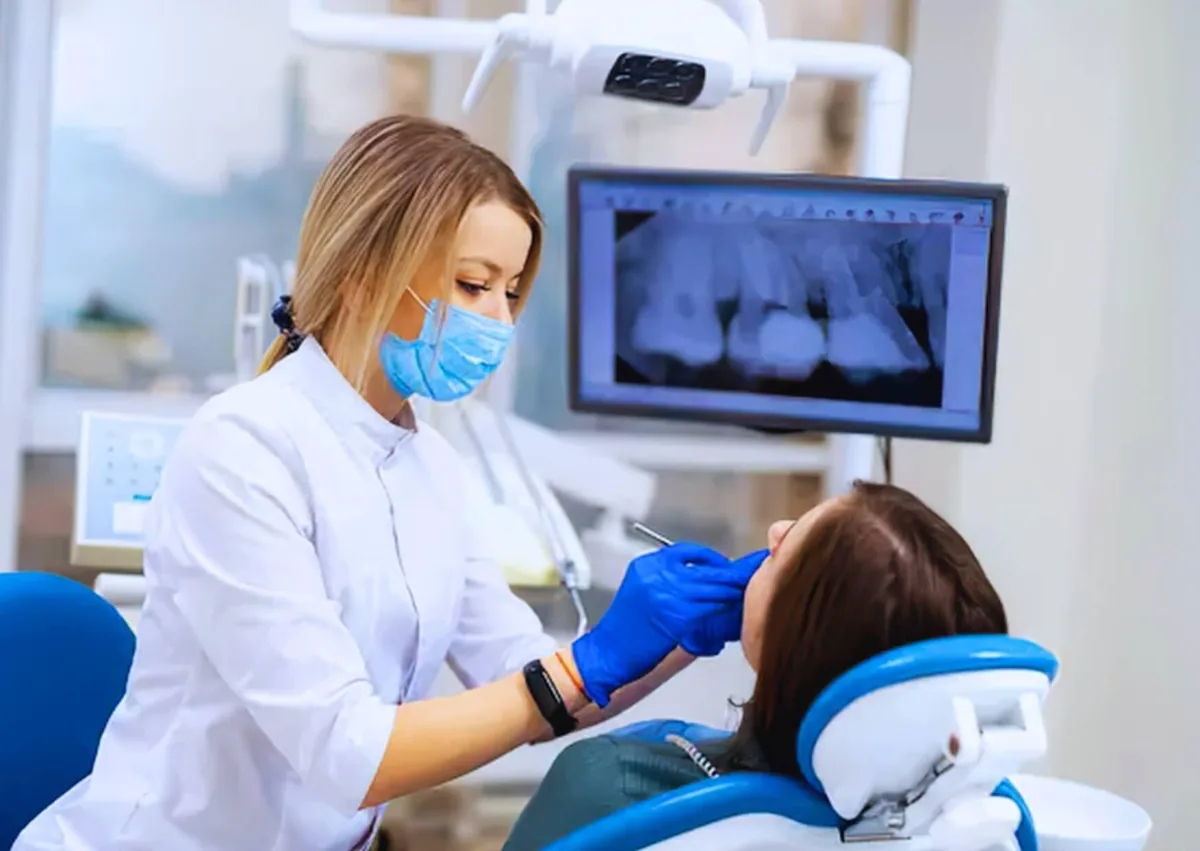
A tooth-count evaluation is usually simple. The dentist examines the mouth, reviews your history, and may recommend X-rays to locate unerupted teeth, evaluate bone and roots, or explain an unexpected gap.
If a missing tooth needs treatment, the next step may include photos, scans, impressions, or bite records. A bridge or partial denture usually involves fitting visits, while an implant often requires staged treatment and healing before the final crown is placed.
Local anesthetic is used for procedures that would otherwise be uncomfortable. Some soreness or pressure afterward can be normal, but severe pain, increasing swelling, fever, uncontrolled bleeding, trouble swallowing, or trouble breathing needs prompt professional care, with breathing or swallowing difficulty requiring emergency attention.
If extractions are part of treatment, practical recovery guidance is available on what to eat after wisdom teeth removal and what to drink after wisdom teeth removal.
A consultation makes sense if a child's teeth seem significantly delayed, a baby tooth stays in place much longer than expected, or a permanent tooth does not come in on time. It is also a good idea for unexplained gaps, crowding, bite changes, or uncertainty about wisdom teeth.
People considering tooth replacement are often good candidates when decay and gum disease are under control and there is enough support for the chosen restoration. Medical history, growth, bone volume, bite forces, and personal goals all affect which option is safest and most predictable.
A professional exam can confirm the true tooth count and explain whether observation, orthodontic care, restoration, or replacement is the best next step. Early planning can preserve more options, especially when a missing or unerupted tooth is affecting alignment or appearance.
The next step is a focused exam with X-rays to confirm missing or unerupted teeth and review replacement options tailored to your goals. North Atlanta Center for Cosmetic & Implant Dentistry offers dental checkups and dental implants in Buford, GA, and serves nearby Sugar Hill and Suwanee; call (770) 932-1115 to schedule.
No. Thirty-two is the full adult count including four wisdom teeth, but some people never develop all of them, and others have them removed. An adult with 28 healthy teeth and no wisdom teeth can still have a complete, functional smile.
Yes. Wisdom teeth are the four third molars and are part of the permanent dentition, even if they stay impacted or never develop.
It depends on development. Most permanent teeth other than wisdom teeth are present by the early teen years, so 28 is common, while wisdom teeth usually develop or erupt later and may never appear.
Yes, but it is uncommon. Extra teeth, called supernumerary teeth, may be visible or hidden below the gums and are often found on an exam or X-rays.
No. Wisdom teeth usually do not need replacement, and some other spaces can be monitored if they are healthy and stable. A dentist can evaluate the gap, neighboring teeth, bite, bone, and your goals before recommending treatment.
