In the United States, full mouth dental implants often cost about $40,000 to $90,000 or more for both arches, though some cases fall below or above that range. Published estimates of full-mouth implants cost vary because treatment designs differ and quotes do not always include the same services.
“Full mouth dental implants” usually means replacing all teeth in the upper jaw, lower jaw, or both with implant-supported teeth. It does not mean one implant for every missing tooth, and the final price depends on the restoration type, number of implants, materials, surgical needs, location, clinician experience, and what is included in the estimate.
If you’re weighing replacement options for missing or failing teeth, learning about dental implants can clarify what a full-arch plan involves and which costs apply. North Atlanta Center for Cosmetic & Implant Dentistry in Buford, GA explains realistic timelines and restoration choices to help you compare options and prepare financially.
A complete estimate may include exams, scans, extractions, bone grafting, implant placement, sedation or anesthesia, temporary teeth, the final implant restoration, and follow-up care. Some offices list these items separately, so a lower starting number may not reflect the full cost.
Typical broad U.S. ranges are:
These are educational estimates, not fee guarantees. Complex grafting, treatment under anesthesia, premium materials, or care involving several specialists can increase the total.
The number of implants matters, but it is only one part of the fee. A full-arch bridge may be supported by All-on-4 implants, six implants, or another clinically appropriate number based on bone anatomy, bite forces, and the treatment plan.
Material choice also affects price and long-term performance. Acrylic or composite restorations may cost less upfront and can be easier to repair, while zirconia may offer strong wear resistance and a polished look but often costs more.
Additional procedures can change the budget significantly. Extractions, gum disease treatment, bone grafting, sinus augmentation, temporary restorations, and medically supervised sedation may each add cost and treatment time.
Location and provider experience also influence pricing. Full-arch treatment may involve a general dentist, prosthodontist, oral surgeon, periodontist, dental laboratory, or a coordinated team.
The main decision is not only fixed versus removable. Patients should compare comfort, appearance, cleaning needs, repairability, available bone, hand dexterity, and long-term maintenance.
|
Option |
How It Works |
Benefits |
Important Limits |
|---|---|---|---|
|
Fixed full-arch bridge |
Attached to several implants and removed only by a dental professional |
Stable, natural-looking, no routine removal |
Higher cost; cleaning underneath is essential; repairs may be more complex |
|
Implant-retained removable denture |
Snaps onto implants but is removed at home |
Better stability than a conventional denture; often lower cost than fixed treatment |
Still removable; attachments wear and need replacement |
|
Conventional denture |
Rests on gums without implants |
Lowest initial cost; no implant surgery |
Less stability and chewing efficiency; bone shrinkage continues |
|
Individual implants and bridges |
Replaces teeth in smaller sections |
Can resemble separate teeth and allow segmented repairs |
Usually requires more implants, adequate bone, and a higher budget |
Implants can improve stability and chewing compared with conventional dentures, but they do not fully recreate natural teeth. For more on the advantages, see benefits of dental implants.
Speech and eating often require an adjustment period. Even fixed restorations need daily cleaning around the implants.
Implants may function for many years, but no provider can promise lifetime success. Smoking, uncontrolled diabetes, poor plaque control, teeth grinding, untreated gum disease, and missed maintenance visits can increase implant failure risk.
The bridge or denture may need repair or replacement before the implants do. Acrylic teeth can wear or chip, removable denture attachments wear out, and screws or other components may loosen over time.
Ask whether the estimate includes routine adjustments, professional removal and cleaning of a fixed bridge, night guards, repairs, and replacement parts. Long-term maintenance costs should be part of the budget even when surgery and healing go smoothly.
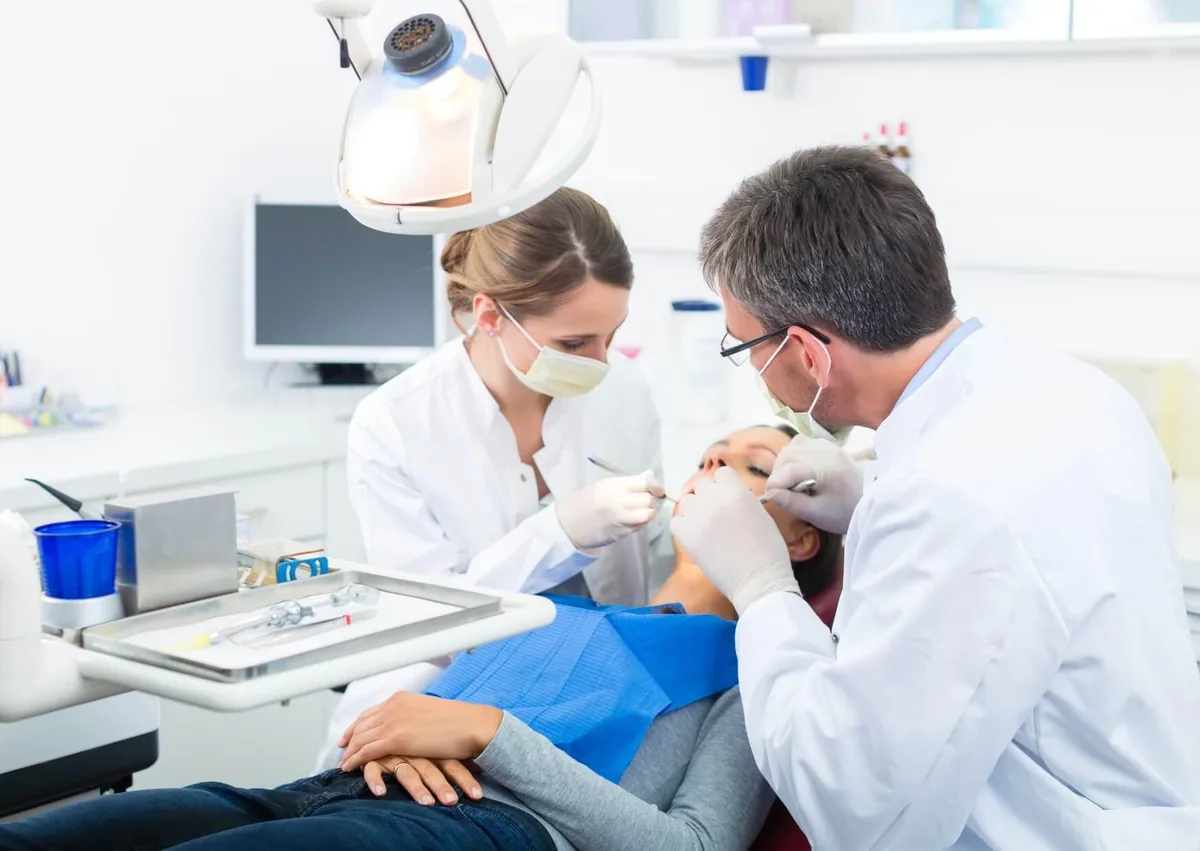
Treatment usually starts with an exam, health review, photos or scans, and three-dimensional imaging. The dentist checks bone volume, gum health, bite, smile goals, medications, and medical conditions that could affect healing.
During implant placement, local anesthesia is typically used, and sedation may be available when appropriate. Most patients report pressure or vibration rather than sharp pain during the procedure.
After surgery, swelling, bruising, tenderness, and a temporary soft-food period are common. Some patients can receive temporary fixed teeth the same day, but that depends on implant stability and other clinical factors.
If immediate loading is used, the temporary teeth usually come with diet restrictions while the implants heal into the bone over several months. The final restoration is fitted after healing, followed by bite adjustments and hygiene instructions.
Persistent bleeding, worsening swelling, fever, pus, trouble breathing or swallowing, uncontrolled pain, or a suddenly loose restoration should prompt a call to the dental team. Trouble breathing or swallowing requires emergency care.
Dental insurance may help with exams, extractions, dentures, or related procedures, but annual maximums and implant exclusions often leave a large out-of-pocket balance. Medical insurance may contribute in limited cases, such as reconstruction after trauma, cancer treatment, or certain congenital conditions, but coverage is highly plan-specific.
Before agreeing to treatment, ask for a written itemized estimate. Confirm whether imaging, temporary teeth, grafting, anesthesia, the final prosthesis, follow-up visits, and likely maintenance are included.
Financing can spread payments over time, but interest or deferred-interest terms can raise the total amount paid. Compare the full repayment cost, not just the monthly payment.
Potential candidates may have extensive decay, severe tooth loss, failing restorations, advanced periodontal damage, or dentures that remain unstable despite proper adjustment. Adequate bone and healthy gum tissue help, although grafting or alternative implant positioning may make treatment possible in some cases.
Medical conditions do not always rule out implants, but they should be well managed. A dentist may coordinate with a physician when there is uncontrolled diabetes, immune suppression, bleeding risk, prior radiation to the head or neck, certain bone-related medications, or other healing concerns.
Smoking and nicotine use can increase complication risk, and strong home care is essential. A consultation makes sense when missing or failing teeth affect eating, comfort, speech, or confidence, especially before removing more teeth or committing to a treatment design.
A well-planned consultation should give you a diagnosis, alternatives, expected timeline, itemized fees, a maintenance plan, and a clear explanation of what happens if an implant or restoration component fails. Bring your medication list, medical history, previous dental records if available, and your functional and cosmetic priorities.
To get an individualized estimate and clear next steps for full-arch care, request a consultation to review imaging and discuss options. Contact North Atlanta Center for Cosmetic & Implant Dentistry for dental implants in Buford, GA, and nearby Sugar Hill or Suwanee, then call (770) 932-1115 to schedule.
They can provide strong stability, improved chewing, and a more secure restoration for suitable candidates. Whether they are worth the cost depends on your health, anatomy, expectations, maintenance habits, alternatives, and budget.
Quotes may describe different treatments or include different services. Implant number, restorative material, grafting, anesthesia, temporary teeth, laboratory work, location, and clinician expertise all affect the final fee.
Implants and temporary teeth can sometimes be placed in one visit, but healing still takes months. The final restoration is usually delivered later, and not every patient qualifies for immediate fixed teeth.
Original Medicare generally does not cover routine dental implant treatment. Some Medicare Advantage plans or limited medically necessary situations may differ, so patients should verify benefits directly with their plan.
A useful quote should list diagnostic care, surgery, implant components, extractions or grafting, anesthesia, temporary teeth, final materials, follow-up visits, and warranty or repair terms. It should also clarify which possible services are not included.
