A smile can carry history the way a well-used book carries notes in the margins. Small chips, uneven edges, stains that no longer lift with whitening, and tiny gaps between teeth often tell a story of time, habits, genetics, or old dental work that no longer blends in.
When people compare bonding vs. veneers, the real question is usually not which treatment is better in the abstract. It is which one best matches the condition of the teeth, the look a patient wants, the amount of tooth change that is reasonable, and the level of maintenance that feels realistic over the next several years. That difference matters because cosmetic dentistry works best when it respects both appearance and biology.
This decision is rarely just technical. Many patients describe a front tooth that changed after a fall on a basketball court, staining that became more noticeable in photos, or edges that seem to disappear under bright office lighting. Those details matter. Dentistry is not only about surfaces. It is also about how people interpret their own reflection and how carefully a clinician translates that concern into a safe treatment plan.
There is a useful lesson here from narrative medicine, a field that values the patient story as part of diagnosis and care. Teeth may show wear, fracture lines, enamel defects, or color mismatch, but the meaning of those findings depends on context. A minor chip before a wedding, a long-standing gap that has become more bothersome with age, or discoloration after root canal treatment can lead to very different choices even when the teeth look similar at first glance.
That is why the best cosmetic consultation should feel less like a sales pitch and more like close reading. The dentist examines enamel, bite forces, gum symmetry, and habits such as clenching or nail biting, while also listening to what the patient actually wants changed. That listening step is often where the bonding-versus-veneers decision becomes clearer and more responsible.
Patients considering bonding and veneers can turn to North Atlanta Center for Cosmetic & Implant Dentistry for personalized cosmetic dentistry care. We work closely with patients to evaluate their smile concerns, explain available treatment options, and create natural-looking results that support long-term oral health and confidence.
Dental bonding uses a tooth-colored resin, which is a moldable composite material, to reshape or repair part of a tooth. The material is placed directly on the tooth, sculpted to the desired form, and hardened with a curing light. It is commonly used for small chips, worn corners, slight gaps, localized discoloration, and minor shape differences.
One reason bonding is popular is that it is conservative. In many cases, very little natural tooth structure needs to be removed, and sometimes none at all. That makes it appealing for younger patients, for small cosmetic corrections, or for situations where someone wants improvement without committing to a more involved restoration.
Bonding can also be a thoughtful choice when the cosmetic issue is limited to one area. A single chipped front tooth after an accident, for example, may respond well to a carefully layered composite repair. In the right hands, the result can look natural, especially when the dentist pays attention to translucency, edge shape, and how light reflects off neighboring teeth.
That said, bonding is technique-sensitive. It can stain over time, may chip under heavy biting forces, and often needs touch-ups or replacement sooner than porcelain. For some patients, that tradeoff is acceptable. For others, especially those seeking broader smile changes, it may feel like a temporary chapter rather than the final version.
Dental veneers are thin shells, usually made of porcelain or sometimes composite, that cover the front surface of a tooth. They are designed to improve color, shape, length, and sometimes the appearance of mild spacing or minor alignment issues. Porcelain veneers are especially valued for their lifelike light reflection and resistance to staining.
Unlike direct bonding, veneers are usually planned more comprehensively. The process may involve photographs, digital design, study models, and temporary restorations so the patient can preview changes in smile length, contour, and symmetry. That planning is one reason veneers are often chosen when several front teeth need coordinated improvement rather than a small isolated repair, often as part of a smile makeover.
In many cases, a small amount of enamel is reshaped to make room for the veneer and help it sit naturally. Enamel is the hard outer layer of the tooth. Preserving as much of it as possible matters because enamel provides the strongest surface for bonding and helps support long-term tooth health.
Veneers can be an excellent option for teeth with stubborn discoloration, enamel defects, repeated old bonding that no longer matches, or multiple cosmetic concerns happening at once. Still, they are not a universal answer. If the bite is unstable, if gum disease is active, or if a patient grinds heavily without protection, veneers may fail earlier or require changes in the treatment plan.
The best comparison is not about marketing language. It is about what each treatment can realistically do, how long it tends to last, and what kind of maintenance it asks of the patient.
| Feature | Bonding | Veneers |
| Main material | Composite resin | Usually porcelain |
| Best for | Small chips, minor gaps, limited reshaping, localized color correction | Broader smile redesign, deeper discoloration, multiple front teeth, longer-lasting surface change |
| Tooth reduction | Often minimal or none | Often some enamel reshaping is needed |
| Visit pattern | Often completed in one visit | Usually requires planning, preparation, and final placement over multiple visits |
| Appearance over time | Can look very natural but may stain or dull sooner | Often maintains color and gloss longer |
| Repairability | Usually easier to patch or modify | Repairs may be more limited and sometimes require replacement |
| Durability | Good for selected cases, but more prone to wear or chipping | Generally more durable, especially porcelain |
| Cost pattern | Lower upfront cost in many offices | Higher upfront cost, often with longer service life |
A simple way to think about it is this: bonding often edits a sentence, while veneers may rewrite the paragraph. Neither approach is automatically better. The right choice depends on how much change is needed and how durable that change needs to be.
Patients often assume veneers always look better, but that is too simplistic. A well-done bonding case on a small chip can be almost invisible, especially when the surrounding tooth is healthy and the color match is precise. For subtle corrections, direct composite can preserve a very natural character because the original tooth remains the dominant visual element.
Veneers tend to have an advantage when several front teeth need coordinated changes. Porcelain can mimic the way enamel reflects and transmits light, which helps create depth rather than a flat, opaque look. This is particularly useful when teeth are discolored, uneven in shape, or previously restored with materials that no longer blend.
The least natural results usually come from poor case selection, not from the material alone. Teeth that are made too white, too uniform, or too bulky can look artificial whether they are bonded or veneered. The most attractive cosmetic work usually still allows a smile to look like it belongs to a real person in daylight, on video calls, and in close conversation.
Longevity varies, and no restoration lasts forever. Bonding may last several years, sometimes longer, but it is generally more vulnerable to staining, edge wear, and small fractures. Veneers, especially porcelain veneers, often last longer when they are well planned, properly bonded, and protected from excessive force.
The bite plays a major role here. A bite is the way the upper and lower teeth meet during chewing and at rest. If a patient clenches, grinds during sleep, bites pens, opens packages with the teeth, or has edge-to-edge contact on the front teeth, both bonding and veneers can fail sooner. Custom night guards are a common and effective way to protect restorations from overnight grinding.
Gum health matters too. If the gums are inflamed or uneven, even a beautiful restoration may not age well visually. A careful dentist will often address periodontal health, which means the health of the gums and supporting tissues, before moving ahead with cosmetic treatment.
If a restoration chips, loosens, changes color, or starts catching floss, it is worth scheduling an evaluation rather than waiting. Early repair is often simpler than delayed repair.
Cost is a real part of the bonding-vs-veneers decision, but the lowest initial fee is not always the lowest long-term cost. Bonding often costs less upfront, which can make it more accessible for small cosmetic changes. However, if it needs more frequent polishing, repair, or replacement, the total cost over time may narrow the gap.
Veneers usually involve higher laboratory and planning costs, particularly when porcelain is used and multiple teeth are treated together. That higher initial investment may make sense when the goal is a more stable color and shape change over many years. Still, it only makes sense if the teeth and bite are good candidates. If you’re weighing long-term value, consider reading are veneers worth it.
Maintenance for both options includes routine cleanings, good home oral hygiene, and avoiding avoidable trauma. Dark beverages, tobacco, and highly pigmented foods may discolor bonding more readily than porcelain. Nighttime grinding can damage either restoration, so some patients may need a protective appliance recommended by a dentist.
The practical question is not just what looks best on day one. It is what still feels acceptable after coffee, travel, stress, and ordinary life have had time to test it.
Bonding may be the better choice when the cosmetic issue is small and well defined. Examples include a minor chip on one front tooth, a narrow gap, a slightly short edge, or a small area of discoloration that does not involve the whole smile.
It may also be useful when a patient wants a conservative or reversible first step before considering more extensive treatment. In some cases, bonding can serve as a preview of shape changes, helping a patient decide whether a larger cosmetic plan feels right.
Bonding is often reasonable when enamel is healthy, the bite is not overly destructive, and expectations are realistic about maintenance. It can also be a practical option for younger adults, where preserving tooth structure is especially important.
A dentist may be more cautious about bonding if the tooth already has a large filling, if the edge takes heavy force, or if the color problem is deep and diffuse rather than localized.
Veneers may make more sense when several front teeth need to be changed together for color, shape, and proportion. They are often considered for tetracycline staining, enamel defects, old mismatched restorations, worn edges, or multiple cosmetic concerns that cannot be solved predictably with spot repairs.
They may also be preferred when a patient wants a more durable surface that resists staining better than composite. Porcelain can provide a stable finish, especially in patients who have had repeated bonding repairs and are tired of ongoing maintenance. If you reach the point of choosing veneers, our article on deciding on veneers explains common next steps and what to expect.
That said, veneers should not be used to hide problems that need other treatment first. Significant crowding may call for orthodontic care. Active decay, gum disease, untreated clenching, or jaw pain should be evaluated before cosmetic work is finalized.
A careful cosmetic plan often starts with the question, what is the least invasive treatment that can achieve the goal safely and predictably? Sometimes that answer is veneers. Often, it is not obvious until the exam is complete.
Cosmetic concerns can overlap with disease, and that distinction matters. If a tooth is darkening, painful, loose, sensitive to pressure, or associated with swelling, the issue may be more than appearance. A cracked tooth, nerve injury, infection, or gum problem can sometimes first appear as a cosmetic complaint.
Seek prompt dental evaluation if there is facial swelling, fever, pus, severe tooth pain, trauma, or a broken tooth with sharp pain. Those findings can suggest infection, fracture, or urgent structural damage. Cosmetic treatment should wait until the underlying problem has been diagnosed and stabilized.
Less dramatic signs also deserve attention. Bleeding gums, chronic bad breath, mobility, recession, and repeated chipping may point to periodontal disease, bite imbalance, or parafunctional habits such as grinding. Covering those signs without addressing the cause can shorten the life of any restoration.
General education can help patients ask better questions, but it cannot replace an exam. If symptoms are persistent, worsening, severe, or simply unclear, a dentist should evaluate the teeth directly.
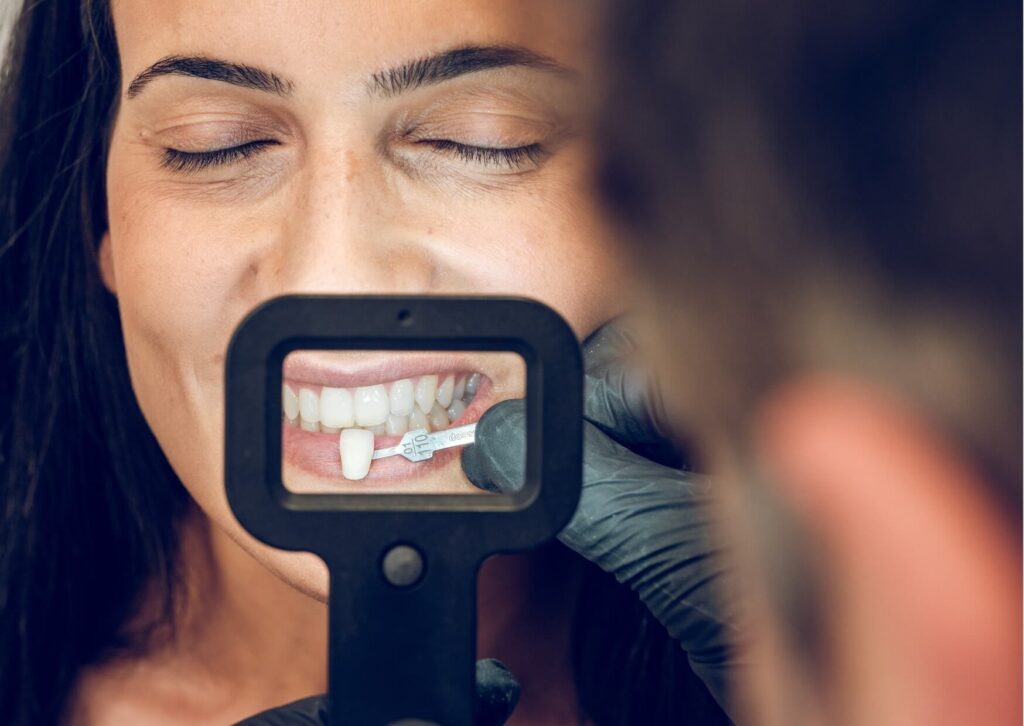
Choosing between bonding vs veneers is about more than improving appearance. The right treatment should support long-term oral health, fit your cosmetic goals, and provide results that feel natural and comfortable. A personalized evaluation can help determine which option best matches the condition of your teeth, your lifestyle, and your expectations for durability and maintenance.
At North Atlanta Center for Cosmetic & Implant Dentistry in Buford, GA, patients receive customized cosmetic dentistry care designed around both function and aesthetics. Whether you are considering minor cosmetic improvements or a more complete smile enhancement, the team can guide you through every step of the process.
Call (770) 932-1115 today to schedule your consultation and learn which cosmetic solution may be right for your smile.
Often, yes. For a small chip on an otherwise healthy tooth, bonding may be the more conservative option because it can repair the area with minimal tooth alteration. A dental exam is still important to confirm that the chip is not part of a larger crack or bite problem.
Not necessarily, but veneers often require some enamel reshaping, so they should be planned carefully. When done for the right reasons and bonded properly to healthy teeth, they can be a safe treatment, but they are not something to choose casually.
In many cases, yes. Composite bonding can pick up stain and lose surface gloss sooner than porcelain, especially with coffee, tea, tobacco, or time. Regular maintenance can help, but color stability is one reason some patients choose veneers.
Sometimes. Small gaps may respond very well to bonding if the tooth proportions and bite allow it. Larger spaces or cases involving multiple shape issues may be better served by orthodontics, veneers, or a combined plan.
Veneers, especially porcelain veneers, often last longer than bonding. Longevity depends on material choice, bite forces, oral habits, gum health, and the quality of the treatment plan.
Yes. If the cosmetic concern is persistent or if there is any pain, sensitivity, darkening, repeated chipping, or uncertainty about the cause, a dental evaluation is the safest next step. Education can guide questions, but treatment decisions should be personalized after an exam.
