Wisdom teeth surgery typically takes 45 minutes to 1 hour, depending on how many teeth are being removed and their complexity. A simple extraction of one erupted tooth may take as little as 20 minutes, while removing four impacted wisdom teeth could stretch the procedure to over an hour.
What Is Wisdom Teeth Surgery and Why Is It Necessary?
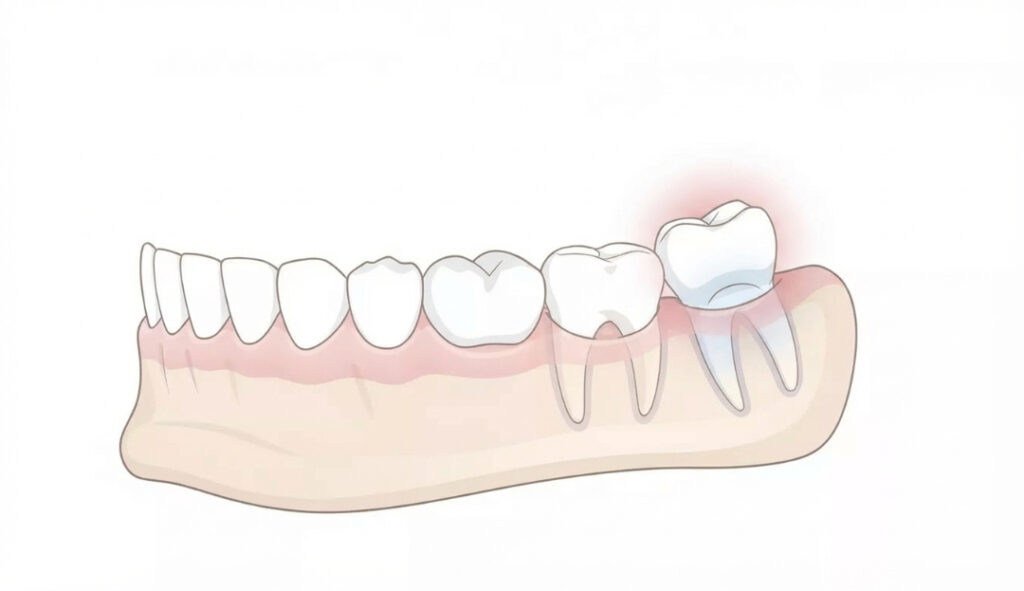
Wisdom teeth, also known as third molars, usually emerge between ages 17 and 25. In many cases, they cause problems due to lack of space in the jaw, leading to:
Pain or pressure in the back of the mouth
Swollen or infected gums
Tooth crowding
Cysts or damage to nearby teeth
Not everyone needs wisdom teeth removed, but if they are impacted, growing at an angle, or causing oral health issues, extraction becomes essential. At Buford Dentist, we evaluate your unique condition to determine whether surgery is necessary.
How Long Does Wisdom Teeth Surgery Typically Take?
The average surgery time for wisdom teeth removal is between 45 minutes to 1 hour. The timeline varies depending on several factors:
Single erupted tooth: 15 to 30 minutes
All four erupted teeth: 30 to 45 minutes
Four impacted teeth: 60 to 90 minutes
Same-day surgery is standard practice. You'll arrive, undergo the procedure, recover from anesthesia, and return home within a few hours.
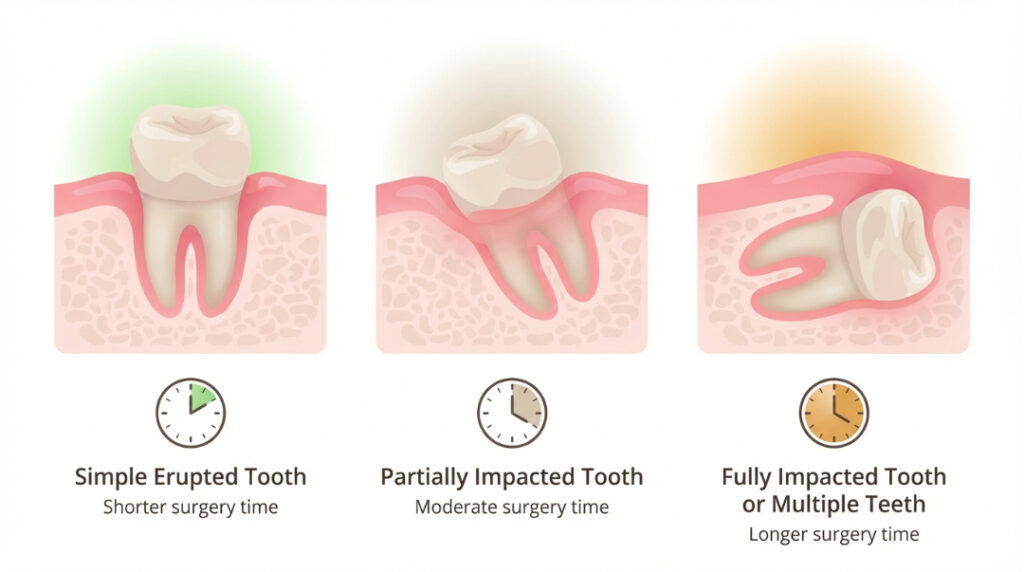
Partially impacted: Requires more time and possibly bone removal
Fully impacted or angled teeth: Longest and most complex
2. Number of Teeth Being Removed
One tooth may only take 15–30 minutes
All four may take up to 90 minutes
3. Type of Anesthesia
Local anesthesia: Shorter prep and recovery
IV sedation or general anesthesia: Adds time before and after surgery for monitoring
4. Surgeon’s Technique and Experience
Experienced oral surgeons can work faster and more efficiently
Advanced tools like piezoelectric instruments can reduce surgical time
5. Presence of Infection or Inflammation
Pre-existing swelling, cysts, or infection can slow down the process
Infected tissue may need additional care during removal
Personalized Timelines Based on Patient Cases
Case: Single Erupted Tooth
Time: 15 to 25 minutes
Minimal bleeding
Local anesthesia only
Quick post-op recovery
Case: Four Impacted Teeth
Time: 60 to 90 minutes
General anesthesia recommended
Bone cutting and tooth sectioning may be needed
Longer recovery and more swelling expected
Factors That Speed Things Up
Good health and no infections
Simple tooth alignment
Highly skilled oral surgeon
Factors That Slow Things Down
Impacted or angled wisdom teeth
Pre-surgery anxiety or medical conditions
Need for bone removal or stitches
What Happens During the Procedure? [Step-by-Step Guide]
Pre-Surgery Preparation
Review medical history
Discuss anesthesia options
Sign consent forms
Sedation and Numbing
Local, IV, or general anesthesia administered
Area thoroughly numbed
In extremely rare cases, a no anesthesia extraction is performed—typically only when anesthesia isn’t an option due to medical concerns or patient refusal. These cases are highly painful and not generally advised.
Tooth Removal Process
Gum incision (for impacted teeth)
Tooth sectioning (if needed)
Removal using forceps
Post-Surgical Closure
Site is cleaned and stitched
Gauze applied for bleeding control
Recovery Observation
Short stay at the clinic for monitoring
Instructions provided for home care
What to Expect Immediately After Surgery
After the procedure, most patients stay at the clinic for 30–60 minutes for monitoring. Here's what to expect in the first few hours:
Mild to moderate bleeding (controlled with gauze)
Swelling and jaw stiffness
Numbness from anesthesia
Disorientation if sedated
First 24 Hours – Key Guidelines:
Rest and avoid physical exertion
Keep your head elevated
Avoid hot, spicy, or hard foods
Do not smoke or use straws
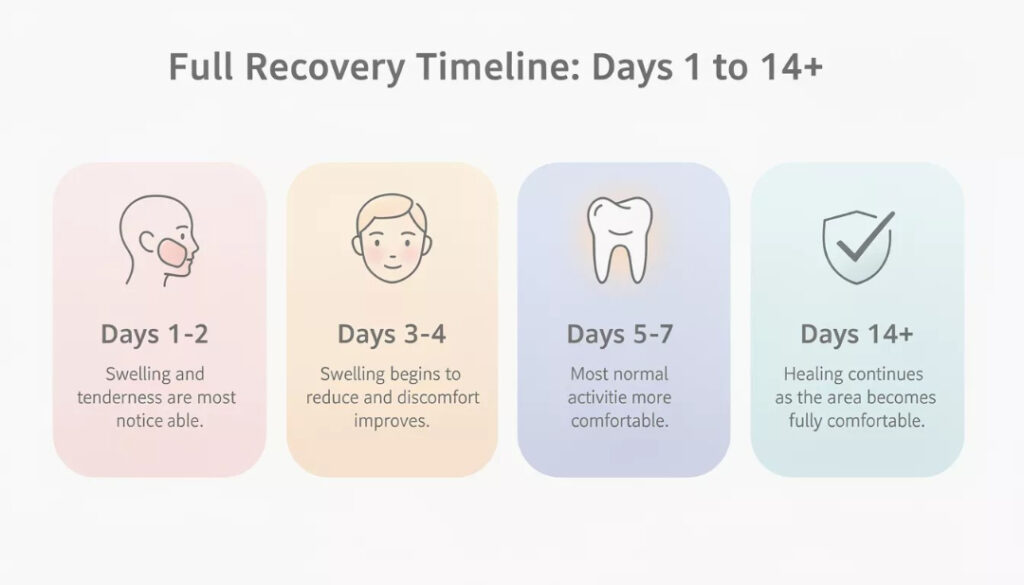
Full Recovery Timeline: Days 1 to 14+
Recovery time varies, but here’s a general guideline:
Day 1
Swelling and bleeding are common
Stick to soft, cold foods
Pain managed with prescribed meds
Day 3
Swelling peaks
Bruising may appear
Resume light activity
Day 7
Stitches (if non-dissolvable) may be removed
Most pain and swelling subsides
Normal eating can begin cautiously
Day 14+
Full recovery for most patients
Resume all normal activities
Best Foods to Eat After Wisdom Tooth Surgery
Eating the right foods can speed up recovery and reduce discomfort. For a complete list of what to eat (and what to skip), check out our Post-Surgery Eating Guide.
First 24 Hours – Stick to:
Applesauce
Greek yogurt
Mashed potatoes
Smoothies (no straw)
Days 2–7 – Add in:
Scrambled eggs
Soft pasta
Cottage cheese
Blended soups
Avoid:
Crunchy or hard foods (chips, nuts)
Acidic or spicy foods
Alcohol and caffeine
Sticky candies or chewing gum
Frequently Asked Questions (FAQ)
How painful is wisdom teeth surgery?
With proper anesthesia, the procedure is painless. Post-op soreness is common but manageable with medication.
When can I go back to work or school?
Many patients return within 2 to 3 days, depending on the surgery's complexity.
What are signs of complications?
Persistent bleeding beyond 24 hours,
Severe swelling or fever,
Foul taste or pus (signs of infection),
Dry socket (intense pain 2–3 days post-op)
When should I call my dentist?
Contact Buford Dentist if you notice signs of infection, prolonged bleeding, or unmanageable pain.
How Long Does It Take to Remove All Four Wisdom Teeth?
If you're planning to have all four wisdom teeth removed, expect:
Surgery Time: 45 to 90 minutes depending on impaction
Initial Recovery: 2 to 3 days of rest
Full Recovery: 10 to 14 days for most patients
Key Considerations:
Choose an experienced oral surgeon
Follow pre- and post-op instructions
Plan a few days off for recovery
Eat soft foods and hydrate
At Buford Dentist, we help make the entire process safe, efficient, and as comfortable as possible. Whether you're facing a simple extraction or a complex case, our expert team is here to guide you from start to finish.
![What Happens During the Procedure? [Step-by-Step Guide]](https://buforddentist.com/wp-content/uploads/2025/12/buforddentist-what-happens-during-the-procedure-step-by-step-guide-1024x585.jpg)