Yes, pineapple juice may help reduce swelling after wisdom teeth removal due to bromelain, an enzyme with anti-inflammatory properties. However, it’s not a miracle cure—moderation is key, and it should be used alongside proven recovery methods.
Pineapple Juice and Wisdom Teeth Recovery: What’s the Hype?
If you’ve been scrolling through social media lately, you’ve likely seen the viral trend: people drinking large amounts of pineapple juice before wisdom teeth removal to reduce swelling and pain. But does pineapple juice really help with wisdom teeth recovery, or is this just another internet myth?
At Buford Dentist, we’ve been closely following the science behind this claim. While pineapple juice contains bromelain—a natural anti-inflammatory enzyme—there’s more to consider than a trending TikTok video. Let’s dive deep into the facts.
Understanding Wisdom Teeth and What Happens After Extraction
What Are Wisdom Teeth?
Wisdom teeth, also known as third molars, are the last set of adult teeth to emerge.
Most people develop them between the ages of 17 and 25.
Often, these teeth become impacted due to lack of space, leading to pain, infection, and swelling—and once removed, patients sometimes wonder, do wisdom teeth grow back?
Typical Post-Extraction Experience
After removal, it’s common to experience:
Swelling around the cheeks and jaw
Mild to moderate pain
Bleeding and bruising
Risk of dry socket (a painful complication when the blood clot is dislodged)
Most recoveries follow this timeline:
Day 1–3: Peak swelling and discomfort
Day 4–7: Reduced swelling, improvement in pain
Week 2+: Near-complete healing in most cases
Standard post-surgical advice includes:
Applying cold compresses
Taking prescribed or OTC pain relievers
Eating soft, non-acidic foods
Keeping the mouth clean without disturbing the surgical site
The Role of Pineapple Juice in Reducing Inflammation
What Is Bromelain and How Does It Work?
Bromelain is an enzyme found in the stem and juice of pineapples.
It’s known for its anti-inflammatory and pain-reducing effects.
Bromelain has been used in surgical recovery, especially in orthopedics and sinus procedures.
Bromelain Supplements vs. Pineapple Juice
Supplements contain standardized doses of bromelain (measured in GDU or MCU units).
Pineapple juice contains bromelain, but in much lower concentrations.
Drinking pineapple juice can deliver some bromelain, but the actual anti-inflammatory effect will be less predictable than with a supplement.
Scientific Backing
A study published in Medical News Today supports the use of bromelain in reducing post-surgical inflammation.
Some small trials found improvements in pain and swelling when bromelain was used post-operatively.
However, most studies focus on purified bromelain, not pineapple juice.
So, while there is promising science behind bromelain, the effectiveness of pineapple juice specifically is still uncertain.
Risks and Side Effects of Drinking Pineapple Juice After Surgery
Why You Shouldn’t Go Overboard
Drinking large amounts of pineapple juice (some TikTokers suggest 64 oz a day) comes with real risks:
High sugar content: Can raise blood sugar and feed oral bacteria, which is not ideal for wound healing.
Acidity: Can irritate your healing gum tissue and surgical site.
Digestive upset: Pineapple juice is known to cause diarrhea or stomach cramps in some people.
Allergies: Rare, but possible reactions include hives, itching, or breathing difficulty.
Dental professionals, including those at Buford Dentist, recommend limiting pineapple juice intake and watching for these signs.
How to Safely Incorporate Pineapple Juice Into Your Recovery
Best Practices If You Want to Try It
If you’re curious about trying pineapple juice as part of your recovery:
Start small: Try 4 to 8 ounces the day before surgery to see how your body reacts.
Avoid high-sugar brands: Opt for 100% natural, unsweetened juice.
Timing: Some recommend drinking pineapple juice the night before surgery and the morning of, but not after due to acidity on healing tissues.
Monitor your reaction: If you feel bloated, nauseous, or experience discomfort, stop immediately.
Alternatives to Consider
Bromelain supplements: Speak to your dentist or oral surgeon before trying.
Other anti-inflammatory foods:
Turmeric (curcumin)
Papaya (contains papain, a similar enzyme)
Ginger
Ice therapy: Still one of the most effective ways to reduce swelling in the first 48 hours.
Arnica Montana: A natural remedy some use to minimize bruising (consult a professional first).
Pineapple Juice Wisdom Teeth Recovery Tips: What Really Works
While pineapple juice may play a supportive role, it should not replace proven post-surgery healing tips. Here are core practices you shouldn’t skip:
Smart Diet Choices
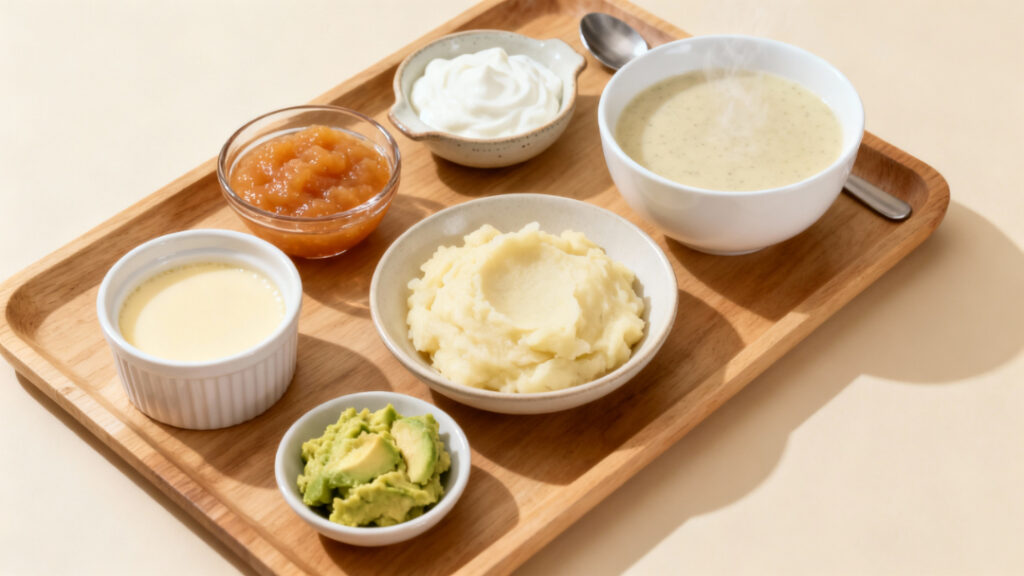
Eat soft, soothing foods that are easy to chew and won’t irritate your extraction sites:
Applesauce
Mashed potatoes
Smoothies (no straws!)
Greek yogurt
Scrambled eggs
Broths and pureed soups
Avoid:
Citrus fruits (can sting)
Crunchy snacks (can lodge in the wound)
Spicy or hot foods (may irritate)
Oral Hygiene After Surgery
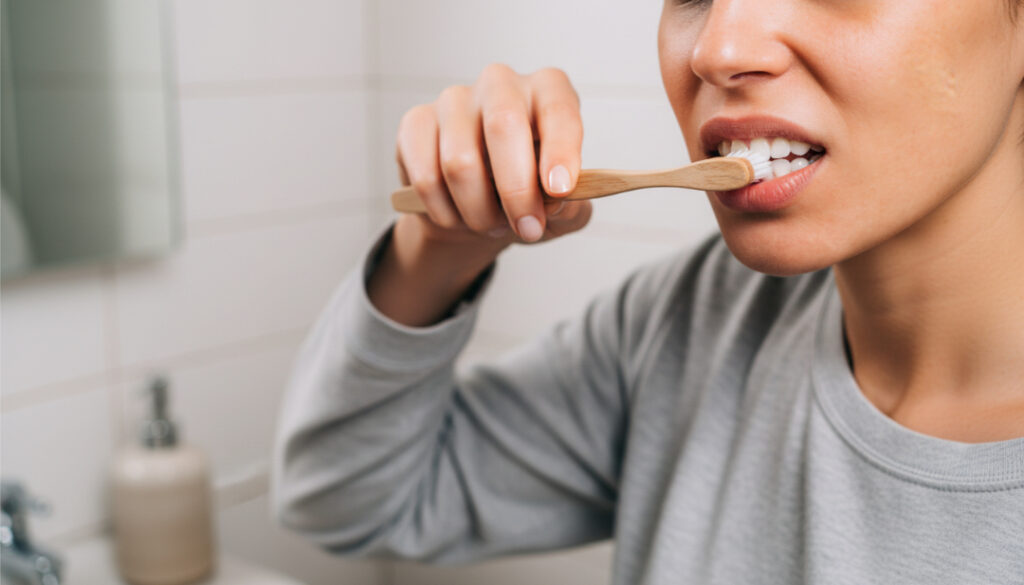
Wait 24 hours before brushing near the extraction site.
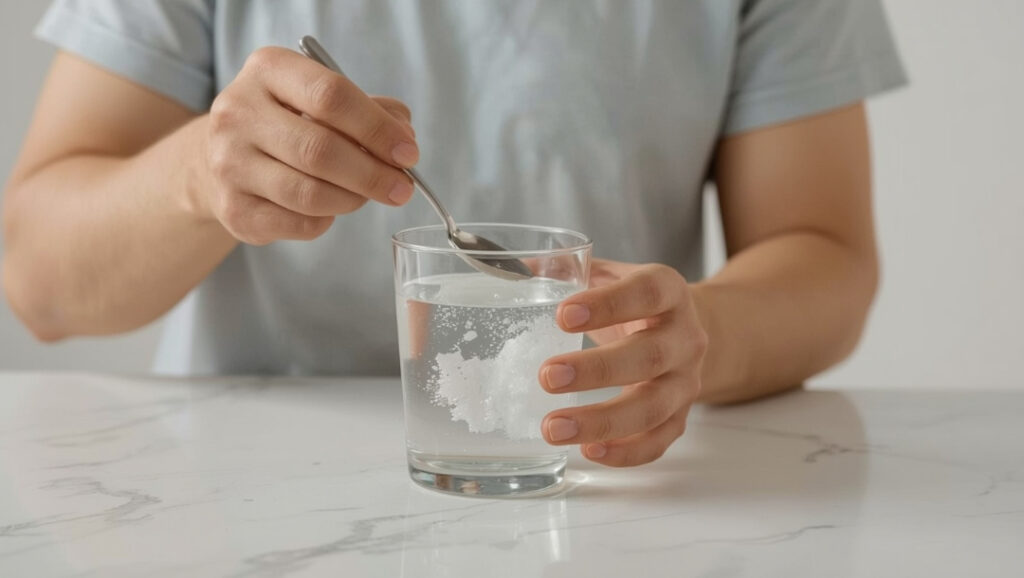
Gently rinse with warm salt water starting the day after surgery.
Avoid mouthwash with alcohol for at least 5–7 days.
Never use straws—suction can dislodge the blood clot and cause dry socket.
Managing Pain and Swelling
Use cold compresses in the first 48 hours, then switch to warm compresses.
OTC meds like ibuprofen reduce both pain and inflammation.
Stay upright—lying flat can increase swelling.
Hydrate consistently with non-acidic, non-carbonated fluids.
TLDR;
Yes, you should brush your teeth after whitening strips, but wait at least 30 minutes before doing so. This waiting period protects your enamel, allows the whitening agents to finish working, and reduces irritation. Use a soft-bristled toothbrush and toothpaste for sensitive teeth to keep your smile healthy.
How Whitening Strips Work and Impact on Enamel
Whitening strips use peroxide-based gels, often hydrogen peroxide or carbamide peroxide, to bleach stains on the enamel surface. These chemicals penetrate through tiny pores in your enamel to break down discoloration.
During treatment, enamel becomes more porous and slightly softened. This is temporary, but during this time your teeth are more sensitive and prone to irritation. Brushing too soon can cause enamel erosion or gum discomfort.
What Are Whitening Strips Made Of
Thin plastic film coated with peroxide-based whitening gel
Hydrogen peroxide for fast results
Carbamide peroxide for slower release but gentler effect
Adhesive layer that allows strips to stay on teeth during use
The active ingredients open micro-pores in enamel and target stain molecules. The process is effective but leaves enamel vulnerable for a short time after treatment.
How Teeth Enamel Changes After Whitening
Whitening temporarily lowers the mineral content in enamel
Teeth may feel more sensitive to cold or heat
Oral pH balance shifts slightly, making enamel softer
The gel residue remains active for several minutes after removal
This is why brushing immediately is discouraged. Teeth need time to re-mineralize and regain hardness before exposure to abrasion from a toothbrush. It also explains why teeth stay yellow for some patients even with daily brushing—factors like enamel thinning, diet, and natural tooth color play a role beyond surface stains.
Brushing Before Whitening Strips
Benefits of Pre-Brushing
Brushing before applying whitening strips removes plaque and food particles. This ensures better contact between the whitening gel and enamel. Cleaner surfaces mean more even whitening results.
When and How to Brush Before
Brush 30 minutes before applying strips
Use a soft-bristled toothbrush
Avoid whitening or abrasive toothpaste before treatment
Rinse thoroughly so no toothpaste residue blocks the gel
Waiting before applying strips prevents gum irritation and keeps the peroxide from interacting with toothpaste chemicals.
Brushing After Whitening Strips
Is It Safe to Brush Immediately
Brushing immediately after whitening strips is not safe. The peroxide leaves enamel temporarily weakened, and brushing can wear away the softened surface. It also risks irritating gums already exposed to whitening gel.
How Long Should You Wait Before Brushing
Most dental professionals recommend waiting 30 minutes. This gives enamel time to re-harden and saliva time to restore minerals. Some products may recommend longer, so follow manufacturer instructions.
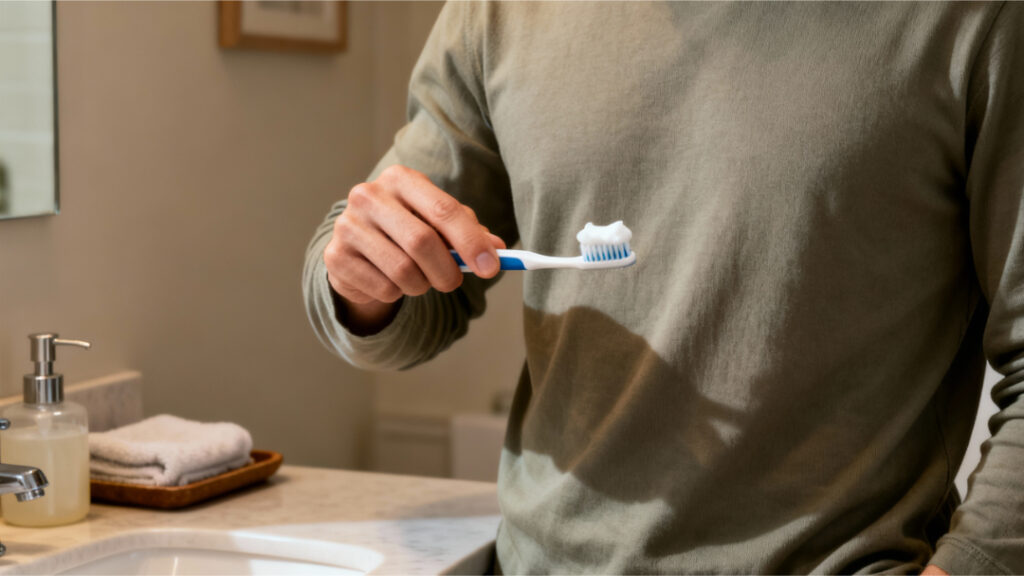
Best Practices for Brushing After Whitening
Wait at least 30 minutes
Use a soft-bristled toothbrush
Choose a fluoride toothpaste designed for sensitive teeth
Apply gentle pressure when brushing
Focus on removing whitening gel residue without scrubbing hard
Following these steps prevents enamel erosion and reduces gum irritation.
Rinsing vs Brushing Immediately
If you feel uncomfortable after removing strips, rinse your mouth with plain water instead of brushing. You can also use an alcohol-free, fluoride mouthwash to freshen your mouth and help enamel recovery. This gives you comfort while still protecting enamel from abrasion.
Foods, Drinks and Habits to Avoid After Whitening
For the first 24 to 48 hours after whitening, teeth are more porous and can stain more easily. Avoid the following:
Coffee, tea, and red wine
Dark sodas and fruit juices
Tomato-based sauces and curries
Berries or foods with strong pigments
Smoking or tobacco products
Stick to water, dairy products, white meats, and light-colored foods to protect your results.
Products to Use after Teeth Whitening
Sensitive toothpaste with fluoride to strengthen enamel
Enamel-strengthening rinses with calcium and phosphate compounds
Soft-bristle toothbrush to avoid abrasion
Gel or paste recommended by your dentist for post-whitening care
Buford Dentist recommends toothpaste specifically formulated for sensitive teeth during your whitening period. This reduces discomfort and keeps enamel strong.
What to Do If You Have Sensitive Teeth or Gums
If your teeth are naturally sensitive, whitening strips may cause more discomfort. Adjust your care plan:
Use strips less often than recommended on the box
Apply strips for shorter periods if your dentist allows
Always wait before brushing afterward
Switch to a sensitive toothpaste before starting treatment
If irritation persists, consult your dentist for alternative whitening methods such as professional in-office treatments with customized protection.
What If You Brushed Too Soon After Whitening
If you accidentally brushed right after using strips, do not panic. You may notice temporary gum irritation or extra sensitivity. To reduce discomfort:
Rinse with fluoride mouthwash
Avoid acidic foods or drinks for the next few hours
Switch to a sensitive toothpaste
Skip whitening for a day or two to let enamel recover
If pain or irritation continues, contact Buford Dentist for an evaluation.
Whitening Strips for Kids, Seniors and Special Conditions
Children: Whitening strips are not recommended for children under 12 because enamel is thinner and gums are more sensitive.
Seniors: Older patients may have thinner enamel and exposed roots, so sensitivity is more common. A dentist should guide whitening use.
Pre-existing conditions: Cavities, worn enamel, or gum disease should be treated before using strips. Whitening gel can aggravate dental problems if untreated.
Scientific Studies and Expert Recommendations
Dental research supports the 30-minute waiting period. A study published in the Journal of the American Dental Association found that peroxide treatments temporarily increase enamel porosity. Another study from the Journal of Dentistry confirmed that brushing immediately after peroxide exposure increases enamel wear.
Professional dental associations emphasize using whitening products as directed and always following up with fluoride-based care. Buford Dentist follows these guidelines in patient care and stresses waiting before brushing to maintain enamel integrity.
Frequently Asked Questions
How long after whitening strips can I brush my teeth
Wait at least 30 minutes before brushing. This allows enamel to recover and reduces sensitivity.
Can brushing too soon damage enamel
Yes. Immediate brushing can wear away softened enamel and cause gum irritation.
Should I use special toothpaste after whitening
Yes. Sensitive or fluoride toothpaste is best to reduce discomfort and protect enamel.
Can I brush before whitening strips or does it reduce effectiveness
You can brush before strips, but wait 30 minutes before applying them. This ensures better contact between gel and enamel.
What is the difference between whitening strips and professional whitening in terms of post-care
Both treatments require gentle brushing afterward. Professional whitening often uses stronger peroxide concentrations, so waiting time and enamel care become even more important.
Post-Whitening Tips from Buford Dentist
Always wait 30 minutes before brushing after strips
Use sensitive toothpaste and a soft brush
Rinse with water or fluoride mouthwash instead of brushing immediately
Avoid staining foods and drinks for at least 24 hours
Follow manufacturer directions and seek dentist advice if unsure
By taking these steps, you protect your enamel, extend the life of your whitening results, and reduce sensitivity. Buford Dentist advises patients to treat whitening as part of a complete oral care routine, not a quick fix.
To speed up wisdom teeth recovery, focus on preserving the blood clot, minimizing swelling, and maintaining gentle oral hygiene. Use cold compresses during the first 48 hours, follow a soft-food diet, stay hydrated, avoid straws or smoking, and rest with your head elevated.
The Wisdom Teeth Recovery Timeline: What to Expect and When
Recovery from wisdom teeth removal happens in stages. Understanding these phases helps you make the right choices to avoid complications and speed up healing.
Typical Healing Stages:
First 24 Hours: Blood clot forms — absolutely essential to protect it
Days 2–3: Swelling and mild pain peak
Days 4–7: Bruising and swelling subside, tissue begins to regenerate
Week 2 and beyond: Most soft tissue healing complete, bone begins remodeling
During these stages, patients often wonder when it’s safe to start speaking again — a concern that ties closely to the talking timeline after wisdom teeth removal, as jaw movement too soon can disrupt healing.
Factors That Affect Healing Speed:
Age (younger patients heal faster)
Smoking (delays healing)
Type of extraction (impacted vs. erupted)
Pre-existing medical conditions (like diabetes)
How to Prevent Dry Socket and Infections
A dry socket can delay healing by over a week — and it hurts. Preventing it is one of the most important steps to speeding up recovery.
What Is a Dry Socket? It happens when the protective blood clot is dislodged, exposing nerves and bone.
How to Avoid It:
Don’t use straws
Avoid smoking or vaping
Don’t spit forcefully or rinse vigorously
Stick to soft foods
Keep fingers and objects away from the site
Follow your dentist’s gauze placement instructions
Signs of Infection to Watch For:
Increasing pain after 3 days
Foul smell or taste
Pus or oozing
Fever or swollen lymph nodes
Contact Buford Dentist immediately if you notice any of these.
How to Reduce Swelling After Wisdom Teeth Removal
Swelling is natural, but controlling it can accelerate recovery significantly.
0–48 Hours: Use cold therapy
Apply an ice pack to the cheek: 20 minutes on, 20 minutes off
Keep your head elevated, especially while sleeping
Limit physical activity
After 48 Hours: Switch to heat
Use warm compresses to stimulate blood flow
Gentle jaw movement can help reduce stiffness
Bonus Tips:
Sleep with 2–3 pillows
Avoid hot showers or spicy foods during peak inflammation
Best Medicine and Natural Remedies for Pain Relief
Pain doesn’t have to slow you down. Use smart pain management to stay comfortable and heal faster.
Medication Strategy:
Ibuprofen: reduces pain and swelling
Acetaminophen: can be combined with ibuprofen for stronger pain relief
Follow dosage instructions — don’t wait until the pain becomes unbearable
Natural Remedies:
Turmeric: anti-inflammatory, can be added to smoothies
How to Clean Mouth After Wisdom Teeth Removal Without Disturbing Healing
Good hygiene protects the wound from bacteria while supporting healthy healing.
Safe Cleaning Timeline:
First 24 Hours: No brushing or rinsing
Day 2 onward: Gently rinse with warm saltwater (½ tsp salt in 1 cup warm water), 3–4 times a day
Avoid swishing — let the rinse sit and tilt out
Brushing:
Brush all other teeth normally
Avoid the extraction area for 3–5 days
Don’t use electric toothbrushes near the site
Mouthwash: Avoid anything alcohol-based. Ask Buford Dentist about chlorhexidine or other dentist-approved rinses.
How to Sleep After Wisdom Teeth Surgery for Faster Recovery
Your sleep habits can influence how well — and how fast — you heal.
Tips for Recovery-Focused Rest:
Keep your head elevated using 2 pillows
Sleep on your back to avoid pressure on your jaw
Avoid sleeping on the side of the extraction
Try to get at least 8 hours of sleep each night
Minimize distractions that cause jaw tension (e.g., teeth grinding)
Stress and Healing:
Elevated stress slows healing
Mindfulness, meditation, and light breathing exercises can help
Avoid work or physical stress for at least 3 days
Recovery Day by Day: Wisdom Teeth Healing Timeline
Day
What You May Feel
What You Should Do
0–1
Bleeding, discomfort
Bite down on gauze, use cold compress, rest, eat soft food
2–3
Swelling, peak inflammation
Continue icing, begin saltwater rinses
4–7
Bruising, mild soreness
Resume brushing, soft solids like eggs or soft pasta
7–14
Tissue rebuilding
Return to normal eating slowly, avoid hard foods
14+
Bone healing begins
Monitor healing, contact dentist if symptoms worsen
Use this chart to gauge your progress and call Buford Dentist if something feels off.
When to See a Dentist After Wisdom Teeth Removal
Sometimes things don’t go as planned — and catching issues early is key.
Call Buford Dentist If You Notice:
Pain worsening after 3 days
Bleeding that doesn’t stop after applying pressure
Swelling increasing after day 3
High fever or chills
Persistent bad taste or pus
Nerve Damage Signs (Rare):
Numb tongue or lips lasting more than 24 hours
Tingling or electrical sensations
Never hesitate to call. Early action prevents serious complications.
Fast Wisdom Teeth Healing Tips You Haven’t Tried Yet
Pro Recovery Hacks:
Use a jaw wrap or recovery band with built-in gel packs
Add probiotics (via yogurt or supplements) to prevent bad bacteria
Take short walks to boost circulation — but avoid jogging
Do gentle jaw stretches after 72 hours to prevent stiffness
Keep a recovery log — track pain levels, foods, meds
Essential Recovery Kit Checklist:
Ice packs
Gauze pads
Salt packets
Soft food items
Medications
Small cup for rinsing
Pillow for elevation
Antibiotic mouth rinse if prescribed
Long-Term Oral Health After Wisdom Tooth Extraction
Wisdom tooth removal can be the start of better oral health — but only if you treat it right.
Looking Ahead:
Schedule a follow-up visit with Buford Dentist
Keep up with cleanings and cavity prevention
Ask about orthodontic evaluations if crowding was an issue
Watch for shifting of remaining teeth if all wisdom teeth were removed
By staying proactive, you can recover faster now — and protect your smile for years to come.
TLDR;
Even if you brush your teeth daily, they can still appear yellow due to enamel thinning, genetic factors, lifestyle habits like coffee or tobacco use, or internal stains that brushing can't remove. Brushing helps with surface stains, but not all discoloration is due to poor hygiene or lack of effort.
Understanding Why Teeth Stay Yellow Even With Daily Brushing
Brushing is essential, but it isn't a silver bullet for tooth color. Many people feel frustrated when their teeth look yellow despite sticking to their oral hygiene routine.Buford Dentist sees this concern regularly — and the answer lies beneath the surface.
Let’s break down why this happens and what you can do about it.
What Actually Determines Tooth Color?
Tooth color isn’t simply about cleanliness. It’s a mix of biology and lifestyle.
Enamel: The thin, white outer shell of your teeth
Dentin: A naturally yellow tissue underneath enamel
Translucency: Thinner enamel = more visible yellow dentin
Age: Enamel wears down over time, exposing more dentin
The color you see is often the dentin showing through thinning enamel, not just surface staining.
Intrinsic vs Extrinsic Stains: What’s the Difference?
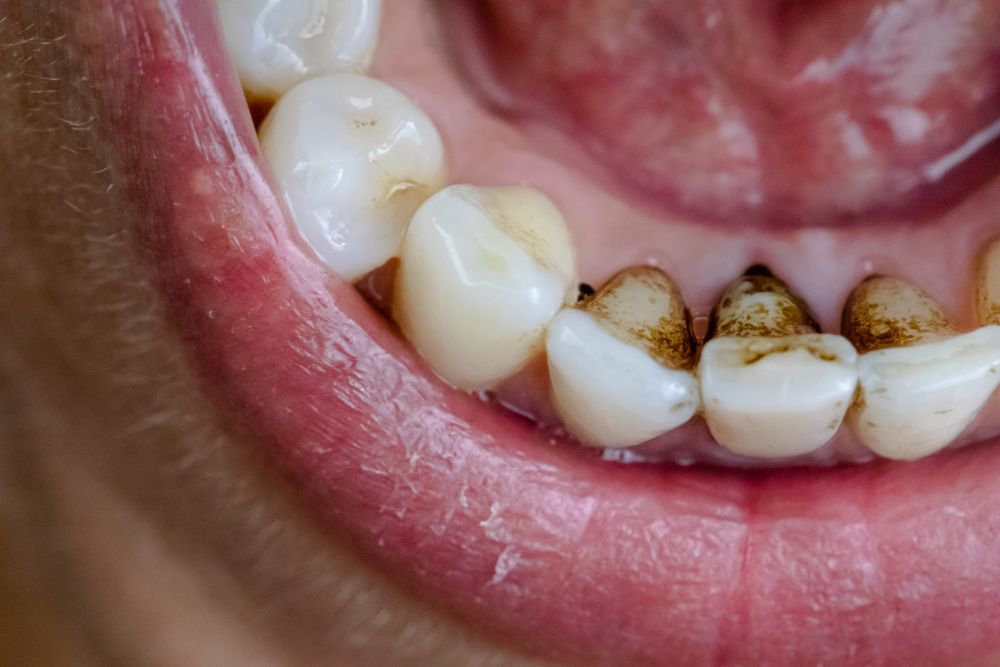
Extrinsic Stains: Surface-level discoloration caused by food, drink, or smoking
Intrinsic Stains: Deep discoloration inside the tooth
Brushing can remove extrinsic stains. Intrinsic ones, like those from medications or trauma, require professional care.
9 Common Reasons Your Teeth Stay Yellow Despite Brushing
Even if you brush daily, these factors may be working against you:
1. Poor Brushing Technique
Brushing too hard or not long enough
Missing parts of the mouth
Using a hard-bristled brush
Tip: Use a soft-bristle brush and gentle, circular motions for 2 full minutes.
2. Brushing at the Wrong Time
Brushing too soon after consuming acidic food or drink can actually harm enamel.
Acid softens enamel
Brushing too soon can wear it down faster
Tip: Wait 30 minutes after acidic meals or drinks.
3. Stain-Causing Foods and Beverages
Coffee, tea, red wine, soy sauce, curry
Berries and beets
Dark sodas
Tip: Use a straw when drinking, and rinse your mouth with water afterward.
4. Enamel Erosion Exposes Yellow Dentin
Acidic foods and drinks
Over-brushing
Acid reflux
Teeth grinding (bruxism)
Thinner enamel = more yellowing.
Tip: Avoid overbrushing and ask your dentist about protective options.
5. Aging and Genetics
Aging naturally thins enamel
Some people inherit more yellow dentin or thinner enamel
Tip: Not all discoloration is avoidable, but it can be managed.
6. Smoking and Tobacco Use
Causes heavy extrinsic stains
Nicotine and tar embed into enamel
Tip: Quitting tobacco has a dramatic effect on whitening.
7. Medications That Cause Discoloration
Tetracycline (especially during childhood)
Antihistamines
Certain blood pressure medications
These can cause gray or yellowish internal stains.
Teeth Still Yellow After Brushing? Here's What You Can Do At Home
There are safe and effective methods to tackle tooth discoloration yourself:
Adjust Your Brushing Routine
Brush twice a day
Use a fluoride toothpaste
Consider an electric toothbrush for better coverage
Floss and Clean Your Tongue
Plaque and bacteria between teeth can cause yellowing
The tongue harbors stain-causing bacteria
Tip: Clean every surface, not just the fronts of teeth.
Whitening Toothpaste and Mouthwash
Look for hydrogen peroxide or carbamide peroxide as active ingredients
Avoid abrasive brands that damage enamel, and always follow proper aftercare for whitening strips to protect your enamel and maximize results
Natural Remedies: Oil Pulling, Baking Soda
Oil pulling (swishing coconut oil) may help reduce bacteria
Baking soda can mildly polish teeth but must be used sparingly
Note: Always consult your dentist before starting DIY whitening.
Diet Adjustments
Eat crunchy veggies (like carrots or apples) to naturally scrub teeth
Drink water after meals
Avoid constant snacking on sugary or acidic foods
Professional Help When At-Home Remedies Aren't Enough
Sometimes, over-the-counter products just aren't effective. Here’s what Buford Dentist recommends:
Dental Cleanings vs Whitening
Cleanings remove surface stains, tartar, and plaque
Whitening penetrates enamel to address intrinsic discoloration
In-Office Whitening Treatments
Zoom Whitening
Laser light activation
Custom trays with gel
Cosmetic Options for Resistant Stains
Veneers: Porcelain covers that hide stains
Bonding: Tooth-colored resin molded to improve appearance
Managing Sensitivity
Sensitive teeth? Your dentist can suggest desensitizing options before whitening. Many patients benefit from low-sensitivity whitening methods that minimize discomfort while still delivering noticeable results. Avoid very cold or hot drinks for a few days post-treatment.
Avoid very cold or hot drinks for a few days post-treatment
Yellow Teeth Don’t Always Mean Poor Hygiene
There’s a cultural expectation of blinding-white teeth, but that’s not always realistic.
Natural tooth shades vary
A light ivory or pale yellow may be perfectly healthy
Discoloration isn’t always a reflection of oral hygiene. It’s often about biology.
Tip: Focus on healthy gums and strong enamel, not just color.
What to Do If Brushing Isn’t Enough
If you've tried everything and still see yellowing:
Revisit your technique and timing
Track your diet
Schedule a professional evaluation
Buford Dentist provides customized care plans to help patients achieve brighter smiles. Routine exams can help identify what’s really causing the discoloration.
Why do my teeth still look yellow after brushing and flossing?
Stains may be below the enamel, or enamel may be too thin to hide dentin. Brushing helps with surface stains but not internal discoloration.
Is it normal for teeth to be a little yellow?
Yes. Natural shades vary, and not all yellow teeth are unhealthy.
Can brushing too hard cause yellow teeth?
Yes. Overbrushing can erode enamel, exposing the yellow dentin beneath.
What foods stain teeth the most?
Coffee, tea, wine, berries, soy sauce, and soda are major culprits.
How long after drinking coffee should I brush?
Wait at least 30 minutes to avoid brushing softened enamel.
Coffee stains teeth because it contains tannins that bind to enamel. You can remove these stains with at-home remedies like baking soda or activated charcoal, or through professional treatments such as in-office whitening. Prevent stains by rinsing after drinking coffee and maintaining good oral hygiene.
Why Does Coffee Stain Teeth?
Coffee contains tannins—natural compounds that cling to the enamel of your teeth. These tannins combine with chromogens, pigmented molecules that cause staining, and stick to the porous surface of your enamel.
Tannins and chromogens: Together they create stubborn surface stains.
Enamel porosity: Tooth enamel has microscopic pores that absorb dark pigments.
Extrinsic vs intrinsic stains:
Extrinsic stains are on the outer layer and respond well to cleaning.
Intrinsic stains are deeper, often requiring professional treatment.
Even a daily coffee habit can lead to a yellowish tint over time if not addressed properly.
Natural Ways to Remove Coffee Stains
Baking Soda and Hydrogen Peroxide
One of the most effective home remedies is a paste of baking soda and hydrogen peroxide.
Mix a small amount of hydrogen peroxide with baking soda until it forms a paste.
Apply gently with a toothbrush for 1–2 minutes.
Rinse thoroughly.
Pros: Effective on surface stains Cons: Overuse can damage enamel
Oil Pulling with Coconut Oil
Swishing coconut oil in your mouth for 10–15 minutes daily is an ancient Ayurvedic practice.
Helps remove toxins and reduce plaque buildup
Mild whitening effect over time
Pros: Natural and gentle Cons: Requires consistency, results vary
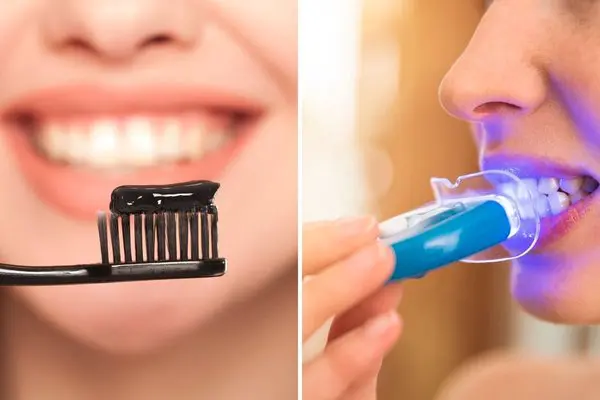
Activated Charcoal
Brush gently using a toothbrush dipped in activated charcoal powder.
Rinse thoroughly and avoid swallowing.
Pros: Abrasive but effective for surface stain removal Cons: Can be too abrasive for some enamel types
Strawberry and Baking Soda Paste
Mash one ripe strawberry and mix with ½ teaspoon baking soda.
Apply to teeth and leave for 5 minutes.
Rinse and brush normally.
Pros: Contains malic acid which helps remove stains Cons: Natural acids may weaken enamel over time if used excessively
Banana Peel Method
Rub the inside of a banana peel on your teeth for 2 minutes.
Wait 10 more minutes before brushing.
Pros: Contains minerals like potassium and magnesium Cons: Minimal scientific backing
Best Over-the-Counter Teeth Whitening for Coffee Stains
Whitening Toothpaste
Choose toothpaste labeled as enamel-safe and containing:
Baking soda
Hydrogen peroxide
Fluoride
Look for ADA-approved options like:
Colgate Optic White
Crest 3D White
Whitening Mouthwash
Products with carbamide or hydrogen peroxide provide a mild bleaching effect:
Use after brushing
Swish for 60 seconds
Whitening Strips
Crest Whitestrips are the most well-known option, but other brands also offer:
Lower peroxide concentrations for sensitive teeth
Shorter application times
Note: Always follow instructions carefully to prevent sensitivity
Charcoal-Based Products
Use caution with charcoal products:
May wear down enamel with frequent use
Opt for those verified by dental professionals
Professional Teeth Whitening for Coffee Stains
When stains become too stubborn for home remedies, it’s time to visit Buford Dentist.
In-Office Bleaching
Treatments like Zoom Whitening or laser whitening offer immediate results:
Cold Brew: Lower acidity makes it less likely to stain
Light Roasts: Contain fewer staining agents than dark roasts
Drink Water Between Sips: Flushes away tannins
Drink Quickly, Not Constantly: Less contact time with enamel
Remineralizing Toothpaste: Strengthens enamel, making it stain-resistant
FAQs About Coffee Stains on Teeth
Can teeth go back to white after coffee stains?
Yes, with the right care and treatments—both at home and professionally—coffee stains can be reversed.
What’s the fastest way to remove coffee stains?
Professional in-office whitening offers the quickest and most noticeable results, often in under an hour.
Are coffee stains on teeth permanent?
No. Most coffee stains are extrinsic and can be removed. However, untreated stains may become deeper and require professional intervention.
How do dentists remove coffee stains?
Dentists use:
High-concentration bleaching agents
Microabrasion techniques
Custom whitening trays
Polishing and ultrasonic cleanings
You should avoid drinking hot coffee for at least the first 24 to 48 hours after wisdom teeth removal because it can dislodge the healing blood clot and increase the risk of dry socket. After this period, you can slowly reintroduce lukewarm or iced coffee in small amounts, avoiding straws, and monitoring for any pain or irritation. Always follow your dentist’s guidance for the safest recovery.
Understanding Wisdom Teeth Removal and Healing Process
When your wisdom teeth are removed, the healing process depends on blood clot formation at the extraction site. This clot protects the bone and nerves while new tissue forms. If the clot dislodges, complications like dry socket can develop.
Healing happens in phases:
Day 1 to 3: Blood clot forms, swelling begins, tissues are tender.
Day 4 to 7: Swelling reduces, tissue starts closing, sensitivity decreases.
Week 2 and beyond: Most patients return to normal routines if there are no complications.
Factors that affect healing include:
Number of teeth removed
Surgical vs. simple extraction
Age and overall health
Smoking or alcohol use
Underlying conditions such as diabetes
Why Coffee After Wisdom Teeth Removal Poses Risks
Coffee affects recovery in several ways.
Heat and Risk of Dry Socket
Hot coffee can dissolve or dislodge the clot, leading to dry socket. This condition exposes bone and nerves, causing severe pain.
Caffeine and Your Body
Caffeine increases heart rate and blood pressure. It also dehydrates you. Dehydration slows healing and can worsen swelling.
Acidity and Additives
Coffee is acidic, which can irritate raw tissue. Sugar, cream, or syrups can stick to the extraction site, raising infection risk.
Straws and Suction
Using a straw creates suction that pulls at the clot. Stirring too vigorously or swishing can have the same effect.
How Long Should You Wait to Drink Coffee?
First 24 Hours
Do not drink any coffee. Avoid hot drinks, caffeine, and anything acidic.
Days 2 to 4
Lukewarm or mild alternatives are safer. Still avoid hot or strong coffee.
Days 5 to 7
Cold or room-temperature coffee may be tolerated. Take small sips without a straw.
Week 2 and Beyond
Most people can return to normal coffee habits if the site shows no pain, swelling, or bleeding.
At Buford Dentist, we advise patients to check in before reintroducing coffee, since every case heals at a different pace.
Types of Coffee and Safer Choices
Hot vs. Lukewarm vs. Iced
Hot coffee: High risk during the first week.
Lukewarm coffee: Safer starting after 2 to 3 days.
Iced coffee: Often tolerated by day 5 if taken slowly.
Regular vs. Decaf vs. Low Acid
Regular coffee: Strong caffeine can dehydrate you.
Decaf: Gentler on the system, safer if taken cool.
Low-acid blends: Better for sensitive tissue.
Additives
Milk and cream coat the site and slow cleaning.
Sugar feeds bacteria, raising infection risk.
Avoid syrups during recovery.
Coffee Styles
Espresso: Strong and acidic, best avoided for 1 to 2 weeks.
Instant: Weaker, but still acidic.
Cold brew: Lower acid, often safer once swelling decreases.
Drip: Common but acidic, wait until healing progresses.
Medication and Health Considerations
Coffee interacts with common medications given after surgery.
Pain relievers: Some increase stomach irritation, which coffee can worsen.
Antibiotics: Caffeine can make nausea or digestive upset worse.
Anesthesia recovery: Stimulants interfere with rest and hydration.
Other health conditions matter too.
High blood pressure patients should limit caffeine.
Smokers experience slower healing, and coffee adds more irritation.
Older patients or those with chronic illnesses should wait longer before drinking coffee.
Safe Practices for Reintroducing Coffee
When you start drinking coffee again, follow these safety steps:
Take small sips, not large gulps
Keep it lukewarm or cold
Skip straws completely
Avoid swishing the liquid in your mouth
Rinse gently with water after drinking
Drink water alongside coffee to stay hydrated
Alternatives to Coffee During Recovery
If you need energy or comfort without coffee, try, try herbal teas like chamomile or ginger. Patients also often ask about the timeline for reintroducing spicy foods, since hot or spicy meals can irritate healing tissues if eaten too soon.
Herbal teas like chamomile or ginger
Decaf coffee in lukewarm form
Smoothies with soft fruits
Clear broths for hydration and nutrients
Coconut water to replace fluids
Special Cases That Change Coffee Guidelines
Multiple or Surgical Extractions
Healing is slower and the risk of dry socket is higher. Delay coffee for at least a week.
Smokers
Nicotine already slows healing. Adding coffee early increases irritation risk.
Older Patients
Age slows recovery. Waiting longer before reintroducing coffee is recommended.
Medical Conditions
Diabetics or immunocompromised patients should consult their dentist before resuming coffee.
Frequently Asked Questions
When can I safely drink coffee after wisdom teeth removal?
Avoid for 24 to 48 hours. Begin with cool or iced versions after day 3 to 5 if you feel comfortable.
Can hot coffee cause dry socket?
Yes, hot coffee increases the risk by dissolving or dislodging the clot.
Is decaf coffee safe?
Decaf is less harsh but still acidic. Wait at least 2 to 3 days and keep it cool.
Can I drink iced coffee with milk or sugar soon after?
Wait until day 5 or later. Milk and sugar increase infection risk.
What if I used a straw by mistake?
Monitor for pain, swelling, or bleeding. If symptoms worsen, contact your dentist.
Does coffee delay healing or interfere with medications?
Yes, caffeine can interfere with hydration, healing speed, and medication absorption.
Scientific Evidence and Expert Opinions
Studies show that hot beverages raise the incidence of dry socket after a tooth extraction. Dental associations recommend avoiding them for 24 to 48 hours. Research also links dehydration with delayed wound healing.
At Buford Dentist, we remind patients that caffeine affects more than comfort. It influences blood pressure, hydration, and recovery speed. Following professional advice reduces complications.
Day 4 to 5: Lukewarm or iced coffee in small amounts.
Day 6 to 7: Increase intake if no pain.
Week 2: Resume normal coffee if recovery is smooth.
Key Takeaways for Coffee After Wisdom Teeth Removal
Do not drink coffee in the first 24 to 48 hours.
Switch to lukewarm or iced versions after a few days.
Avoid straws and hot drinks until healing advances.
Watch for pain, swelling, or bleeding after drinking.
Always follow the specific advice of your dentist.
Buford Dentist advises patients to be cautious. Coffee is important for many people, but safe healing must come first.
Wisdom teeth removal without anesthesia is extremely painful and not recommended for most people. You’ll feel every incision, pull, and twist during the procedure, which can lead to physical trauma and psychological stress, along with serious recovery complications.
What Are Wisdom Teeth and Why They're Removed
Wisdom teeth, or third molars, typically emerge between ages 17–25.
Most people need them removed due to:
Lack of space in the jaw
Impaction (teeth growing sideways or trapped under the gums)
Risk of infection, decay, and misalignment
Anesthesia is commonly used during extraction to make the process tolerable. But what if you skip it entirely?
Local anesthesia numbs only the area of the mouth where the extraction happens
General anesthesia puts you to sleep completely during surgery
Sedation (oral or IV) relaxes you without putting you fully unconscious
Why Anesthesia Matters
Reduces pain perception by blocking nerve signals
Calms anxiety, prevents panic during surgery
Allows dentist to operate without resistance
Concerns Around Anesthesia
Allergies to anesthetic agents
Side effects like nausea, drowsiness, memory loss
Cost—especially for general anesthesia, which can be expensive without insurance
At Buford Dentist, we help patients assess which method suits them best and safely manage any concerns.
Why Some Patients Skip Anesthesia
Medical Reasons
Allergic reaction risks
Pre-existing health conditions that make anesthesia unsafe
Personal Beliefs or Fears
Religious or cultural beliefs
Fear of needles or sedation
Previous bad experiences
Financial Limitations
General anesthesia can cost hundreds more than local anesthesia
Some insurance plans don’t cover full sedation
Skipping anesthesia isn’t common—but it happens. And when it does, you need to understand what you’re walking into.
What Actually Happens During the Procedure Without Anesthesia
Step-by-Step Process
Understanding the wisdom teeth surgery time is crucial, especially if you're considering skipping anesthesia. Here's what the procedure typically involves:
Incision into the gum tissue
Bone removal if the tooth is impacted
Tooth extraction with forceps or surgical tools
Suturing the area to promote healing
What It Feels Like Without Anesthesia
Sharp pain during every cut and tug
Bone-crunching sensations
Extreme discomfort during pressure application
Complications From No Anesthesia
Uncontrolled movement from pain
Risk of excessive bleeding
Incomplete or difficult extraction
Damage to adjacent teeth or tissue
Real Pain: Physical and Emotional Toll
Pain Levels Reported
Described as “excruciating,” “unbearable,” or “traumatizing”
Comparable to childbirth or a broken bone
Psychological Stress
Panic attacks or fainting during surgery
Lasting dental anxiety or trauma
Post-traumatic stress, especially in younger patients
Individual Pain Threshold Matters
Some tolerate discomfort better than others
But even those with high tolerance report overwhelming sensations
Managing Pain Without Anesthesia
If anesthesia isn’t an option, you must manage pain proactively:
Over-the-Counter Medications
Ibuprofen (Advil): Reduces inflammation and pain
Acetaminophen (Tylenol): Manages pain without affecting swelling
Natural Remedies
Cold compress: Numbs area and reduces swelling
Salt water rinses: Cleanses the mouth and eases discomfort
Clove oil: Natural numbing effect, though temporary
Mind-Body Techniques
Deep breathing or meditation before and during the procedure
Listening to calming music
Hypnosis (some find success with guided hypnosis pre-surgery)
Healing Timeline Without Anesthesia
Day-by-Day Breakdown
Day 1: Expect swelling, bleeding, intense soreness
Day 2-3: Swelling peaks, discomfort persists
Day 4-7: Pain begins to ease; scab formation starts
Healing may be slower without sedation due to initial trauma
Risk of complications is higher
What Do Dentists Recommend?
Buford Dentist Perspective
We do not recommend going without anesthesia for wisdom teeth removal unless medically necessary.
Why?
The trauma outweighs the benefits
Recovery complications are more likely
The procedure can become unsafe if the patient can’t stay still
For High-Risk Patients
Discuss allergy testing or alternative anesthesia types
Use local numbing gels and pre-treatment anxiety meds
Consider staggered extractions to reduce stress load
Risk vs. Reward: Is It Ever Worth It?
Pros
Saves money
Avoids sedative side effects
Faster walk-out time
Cons
Severe pain
Higher risk of surgical error
Emotional trauma
Longer recovery due to surgical stress
Our Verdict at Buford Dentist: It’s not worth it for most people. Your health and comfort matter more than saving a few dollars or minutes.
FAQs
Can you get a tooth pulled without anesthesia?
Yes, but it’s extremely painful and not advised unless medically necessary.
Is it legal to refuse anesthesia?
Yes, patients can decline anesthesia, but dentists may also refuse to perform the procedure without it for safety reasons.
What’s the safest alternative to general anesthesia for oral surgery?
Local anesthesia combined with conscious sedation (like nitrous oxide) is typically safe and effective.
How long does pain last after surgery without anesthesia?
Acute pain can last 3–7 days, but discomfort from trauma or complications could linger for weeks.
You can start brushing your teeth 24 hours after a tooth extraction—but avoid the extraction site. Use a soft toothbrush and rinse with warm salt water to promote healing and avoid complications like dry socket.
Why Oral Hygiene Still Matters After a Tooth Extraction
Maintaining oral hygiene—even after an extraction—is vital for healing. Avoiding plaque buildup prevents infection and supports gum regeneration.
Bacteria buildup around the socket can slow healing
Good hygiene reduces your risk of complications like infection or dry socket
Gentle cleaning supports healthy clot formation
Even though you’ll need to adjust your brushing habits for a few days, you shouldn’t stop your oral care altogether.
Brushing Timeline After Tooth Extraction: What to Expect
First 24 Hours – What to Avoid
For the first day, your priority is to allow a blood clot to form over the socket. This clot is essential—it protects the bone and nerves underneath.
Avoid:
Brushing your teeth
Rinsing vigorously
Spitting
Using mouthwash
Using toothpaste
Doing any of the above can dislodge the clot and cause a painful dry socket.
24–72 Hours – Gentle Cleaning Starts
After the first 24 hours, you can begin cleaning your mouth carefully:
Use a soft-bristled toothbrush
Brush your other teeth gently
Avoid brushing directly over the extraction site
Do not floss near the surgical site yet
Saltwater rinses become crucial at this stage:
Mix ½ teaspoon salt with 8 oz. of warm water
Gently swish, but don’t spit forcefully
Rinse 2–3 times per day, especially after meals
This helps prevent infection and keeps the area clean without trauma.
After Day 3 – Reintroducing Toothpaste and Normal Brushing
Once 72 hours have passed, most patients can resume a more typical oral care routine—with caution.
Start using mild toothpaste (avoid whitening or alcohol-based ones)
Brush around the extraction site, not directly on it
Rinse gently after brushing
Depending on your healing, your dentist may clear you for normal brushing around the 5–7 day mark.
Step-by-Step Brushing Technique for Post-Extraction Care
When it’s time to brush again, technique matters. Here’s how to do it safely.
Choosing the Right Toothbrush and Toothpaste
To reduce risk of trauma or irritation:
Use a soft-bristled or ultra-soft toothbrush
Pick a fluoride toothpaste that’s non-abrasive
Avoid toothpaste with strong flavors like mint or cinnamon early on
Some patients prefer children’s toothbrushes during recovery for their gentler bristles.
Saltwater Rinses: When and How to Use Them
Saltwater rinses help cleanse the mouth without disturbing healing tissue.
How to make it:
½ tsp of table salt
8 oz. warm (not hot) water
Stir until dissolved
How to use:
Gently swish, then let the water fall out of your mouth instead of spitting
Rinse 2–3 times per day after eating or brushing
Do this for up to a week, or as advised by your dentist
What Not to Do After a Tooth Extraction (Common Mistakes)
Avoiding mistakes is just as important as following the right steps.
Do NOT:
Brush over the clot or socket
Use mouthwash in the first 72 hours
Use electric toothbrushes near the site
Rinse vigorously
Spit forcefully
Smoke or use straws (suction can dislodge the clot)
Each of these can cause dry socket—a painful condition that delays healing and requires professional treatment.
Special Circumstances That Change Brushing Timeline
Not all extractions are alike. Some situations require extra care and a slightly modified brushing timeline.
Wisdom Tooth Extraction Aftercare
Wisdom teeth are usually located at the very back of the mouth, making aftercare more difficult—similar to cases involving Tooth Extraction for Braces, where careful oral hygiene is also critical during healing.
Wait 24–48 hours before brushing near the area
Be especially gentle—these areas are harder to see and reach
Use saltwater rinses frequently
Don’t use water flossers or irrigation tools unless instructed
After Multiple Tooth Extractions
If you’ve had several teeth removed:
Brush the non-affected areas only for the first 48 hours
Delay brushing near extraction zones for up to 4–5 days
Your dentist may recommend chlorhexidine rinse in some cases
Chronic Conditions (e.g., Diabetes, Gum Disease)
Healing may take longer for patients with certain medical conditions.
Brush gently and carefully for at least a full week
Use soft brushes and mild paste
Schedule a follow-up visit to check healing progress
Watch for increased swelling or signs of infection
Brushing Timeline Visual: Day-by-Day Guide
Here’s a simplified day-by-day breakdown to guide your oral care routine:
Day
Brushing Advice
Day 0
Do NOT brush or rinse at all
Day 1
Start brushing other teeth gently (not near socket)
Day 2–3
Continue brushing carefully; add saltwater rinse
Day 4–7
Slowly resume normal brushing, avoiding the site
Day 7+
Resume brushing near the site if healing allows (ask your dentist
Answers to Common Questions (FAQ Section)
Can I use toothpaste after tooth extraction?
Yes—but only after 24 hours, and use a mild, non-irritating paste.
What if I accidentally brushed too early?
Don’t panic. If you didn’t cause bleeding or severe pain, you’re likely fine. Monitor for symptoms of dry socket and call Buford Dentist if unsure.
How do I know if brushing caused a dry socket?
Watch for these signs: Throbbing pain that gets worse after 2–3 days, Bad breath or foul taste, Visible bone where the tooth was removed and Absence of blood clot
Can I brush my tongue after tooth extraction?
Yes, but avoid doing so for the first 48 hours. Rinse gently instead.
When can I brush after getting stitches removed?
You can brush near the area 12–24 hours after stitch removal, depending on how well it’s healing.
When to Contact Your Dentist
Call Buford Dentist if you experience any of the following:
Excessive bleeding that won’t stop
Severe pain after day 3
Swelling that worsens instead of improves
Signs of infection (pus, odor, fever)
Concerns about brushing or healing timeline
Your peace of mind matters just as much as your oral health.
Best Practices for Safe Brushing After a Tooth Extraction
To wrap up, here’s a quick summary of key post-extraction oral care tips:
Do:
Wait at least 24 hours to brush
Use a soft toothbrush
Rinse with saltwater
Brush gently around the site
Follow your dentist’s advice
Don’t:
Brush over the socket too soon
Rinse or spit forcefully
Use harsh toothpaste
Use mouthwash too early
Skip oral care altogether
Yes, tooth extraction is sometimes necessary with braces, especially when there's severe crowding, bite issues, or jaw misalignment. However, it’s not required for every patient—modern orthodontic treatments offer alternatives that may avoid extractions altogether.
Why Teeth Might Be Extracted During Braces Treatment
Tooth extraction is often part of a comprehensive orthodontic plan when a patient’s mouth is overcrowded or structurally unbalanced. This is not a default step, but a strategic one made by your orthodontist to improve long-term results.
Here’s why teeth are pulled for braces:
Dental Crowding: When there isn’t enough space for teeth to align properly, removing one or more teeth can help relieve crowding and make room for others to shift into place.
Jaw Structure Limitations: Some jaws are too small to accommodate all teeth, which can lead to bite issues and misalignment. Extraction helps create the necessary space for correction.
Improved Treatment Outcomes: Pulling specific teeth can result in a better bite, a more symmetrical smile, and improved oral health in the long run.
Is Tooth Extraction Always Needed for Braces?
No, not all braces treatments require tooth extraction. At Buford Dentist, we assess each patient individually to determine the best approach.
Factors that determine if extraction is needed:
Age and Development: Younger patients may respond better to non-extraction techniques like expanders, depending on jaw flexibility.
Severity of Crowding: Mild to moderate alignment issues often don’t require extractions. Severe crowding usually does.
Wisdom Teeth Consideration: While not always part of a braces plan, wisdom teeth can affect spacing and alignment and might be removed if they interfere.
Which Teeth Are Usually Removed and Why?
Most commonly, premolars are extracted because they sit in the middle of the dental arch and offer ideal space for alignment.
Typical teeth removed for braces:
First Premolars: These are most frequently removed when addressing crowding.
Incisors (in rare cases): Usually done for specific bite correction, such as in severe overjet or protrusion cases.
Molars or Wisdom Teeth: Occasionally removed for spacing or to prevent future misalignment.
Braces and Tooth Extraction Procedure: What to Expect
Tooth extraction may happen either before braces are applied or during treatment, depending on your orthodontist’s plan.
Step 1: Consultation & Imaging X-rays or 3D scans determine which teeth may need to be removed.
Step 2: Local Anesthesia You’ll be numbed completely in the area of extraction—most people feel pressure, not pain.
Step 3: Extraction Appointment The procedure is quick and usually done in under 30 minutes for each tooth.
Step 4: Healing Time You may need a few days before braces or adjustments begin.
Recovery After Tooth Extraction for Braces
Post-Extraction Oral Care is straightforward and essential to avoid complications and prepare your mouth for braces.
What to expect:
Initial Healing (1–3 days): Mild swelling, discomfort, and bleeding are normal. Over-the-counter pain relief helps.
Foods to Eat: Stick to soft foods like mashed potatoes, yogurt, and soup. Avoid anything hot or crunchy.
Braces Schedule: Your orthodontist may wait 1–2 weeks after extraction to begin treatment, allowing tissues to heal.
Alternatives to Removing Teeth for Braces
Modern orthodontics increasingly looks for non-extraction approaches, especially for growing children or patients with minimal crowding.
Popular alternatives:
Palate Expanders: Used in children to widen the upper jaw and create more room without extractions.
Invisalign or Clear Aligners: These can manage mild-to-moderate crowding by moving teeth in small increments.
Interproximal Reduction (IPR): A small amount of enamel is shaved between teeth to create space without removing any.
Dental Arch Widening Devices: These appliances gradually increase the space available for teeth alignment.
What It’s Like to Have Teeth Removed for Braces
Real patients at Buford Dentist often have mixed feelings—some are nervous at first but relieved by the results.
Common patient experiences:
“I was scared, but the procedure was way easier than I expected.”
“My bite improved so much after the premolars were taken out. It was worth it.”
“I didn’t need any extractions—my orthodontist used expanders instead.”
What Orthodontists Say About Tooth Extraction for Braces
Orthodontists weigh multiple factors before deciding on extraction. At Buford Dentist, our goal is to preserve as many natural teeth as possible.
Orthodontist insights:
“We only recommend extractions when crowding is severe or when it's the best option for long-term bite health.”
“With today’s technology, we can avoid extractions more often than in the past.”
“We consider facial aesthetics, jaw alignment, and overall dental health in our decision-making.”
Common Questions About Tooth Extraction with Braces
Is it safe to get teeth removed for braces?
Yes, when done by a qualified professional, it’s a routine and safe procedure.
How many teeth are typically removed?
Usually 2–4 premolars, depending on the level of crowding.
Does everyone need extractions?
No. Many patients complete treatment without needing to remove any teeth.
Is it better to extract or expand?
It depends on age, bone structure, and severity of the case. Expansion is preferred in younger patients.
Related search terms used: how many teeth are removed for braces, does it hurt to get teeth pulled for orthodontics, what if I don’t want extractions
Personalized Braces Treatment at Buford Dentist
Tooth extraction isn't a one-size-fits-all requirement in orthodontics. At Buford Dentist, we create treatment plans that suit your unique smile, jaw shape, and goals.
Here’s what we recommend:
Get a comprehensive orthodontic evaluation
Ask about non-extraction alternatives
Discuss the pros and cons of each approach
Make an informed decision with your provider
Wisdom teeth surgery typically takes 45 minutes to 1 hour, depending on how many teeth are being removed and their complexity. A simple extraction of one erupted tooth may take as little as 20 minutes, while removing four impacted wisdom teeth could stretch the procedure to over an hour.
What Is Wisdom Teeth Surgery and Why Is It Necessary?
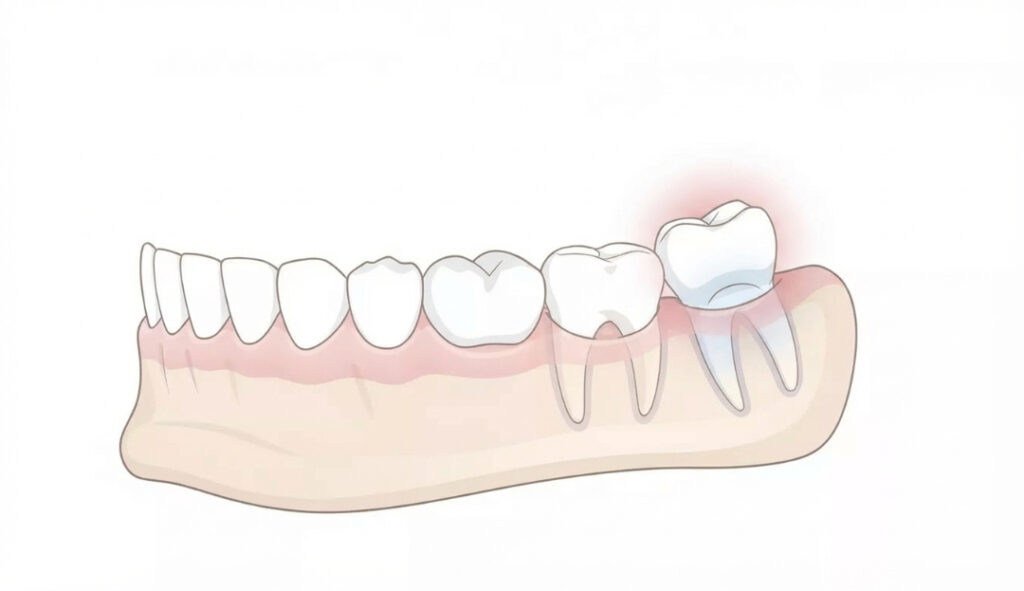
Wisdom teeth, also known as third molars, usually emerge between ages 17 and 25. In many cases, they cause problems due to lack of space in the jaw, leading to:
Pain or pressure in the back of the mouth
Swollen or infected gums
Tooth crowding
Cysts or damage to nearby teeth
Not everyone needs wisdom teeth removed, but if they are impacted, growing at an angle, or causing oral health issues, extraction becomes essential. At Buford Dentist, we evaluate your unique condition to determine whether surgery is necessary.
How Long Does Wisdom Teeth Surgery Typically Take?
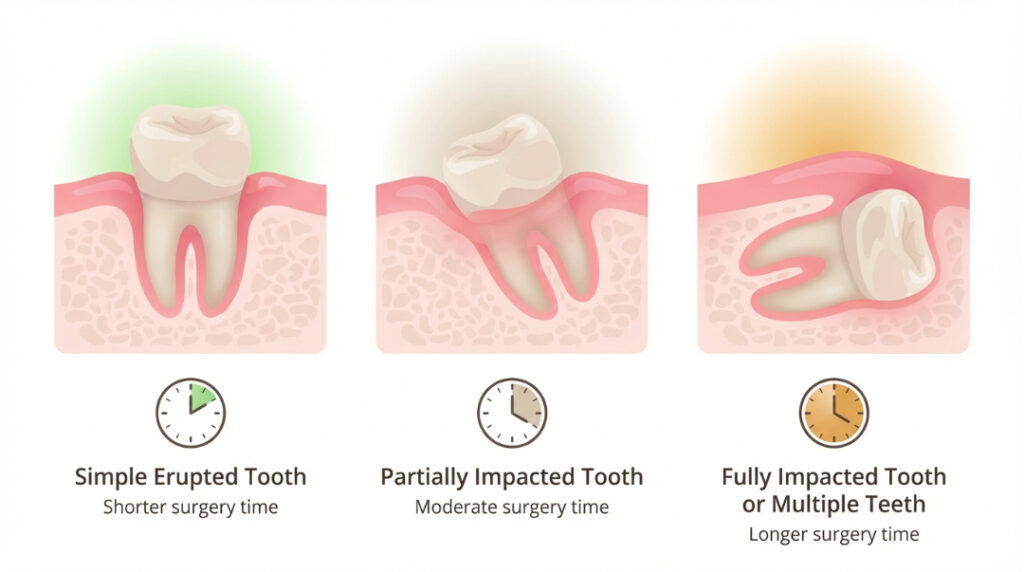
The average surgery time for wisdom teeth removal is between 45 minutes to 1 hour. The timeline varies depending on several factors:
Single erupted tooth: 15 to 30 minutes
All four erupted teeth: 30 to 45 minutes
Four impacted teeth: 60 to 90 minutes
Same-day surgery is standard practice. You'll arrive, undergo the procedure, recover from anesthesia, and return home within a few hours.
Partially impacted: Requires more time and possibly bone removal
Fully impacted or angled teeth: Longest and most complex
2. Number of Teeth Being Removed
One tooth may only take 15–30 minutes
All four may take up to 90 minutes
3. Type of Anesthesia
Local anesthesia: Shorter prep and recovery
IV sedation or general anesthesia: Adds time before and after surgery for monitoring
4. Surgeon’s Technique and Experience
Experienced oral surgeons can work faster and more efficiently
Advanced tools like piezoelectric instruments can reduce surgical time
5. Presence of Infection or Inflammation
Pre-existing swelling, cysts, or infection can slow down the process
Infected tissue may need additional care during removal
Personalized Timelines Based on Patient Cases
Case: Single Erupted Tooth
Time: 15 to 25 minutes
Minimal bleeding
Local anesthesia only
Quick post-op recovery
Case: Four Impacted Teeth
Time: 60 to 90 minutes
General anesthesia recommended
Bone cutting and tooth sectioning may be needed
Longer recovery and more swelling expected
Factors That Speed Things Up
Good health and no infections
Simple tooth alignment
Highly skilled oral surgeon
Factors That Slow Things Down
Impacted or angled wisdom teeth
Pre-surgery anxiety or medical conditions
Need for bone removal or stitches
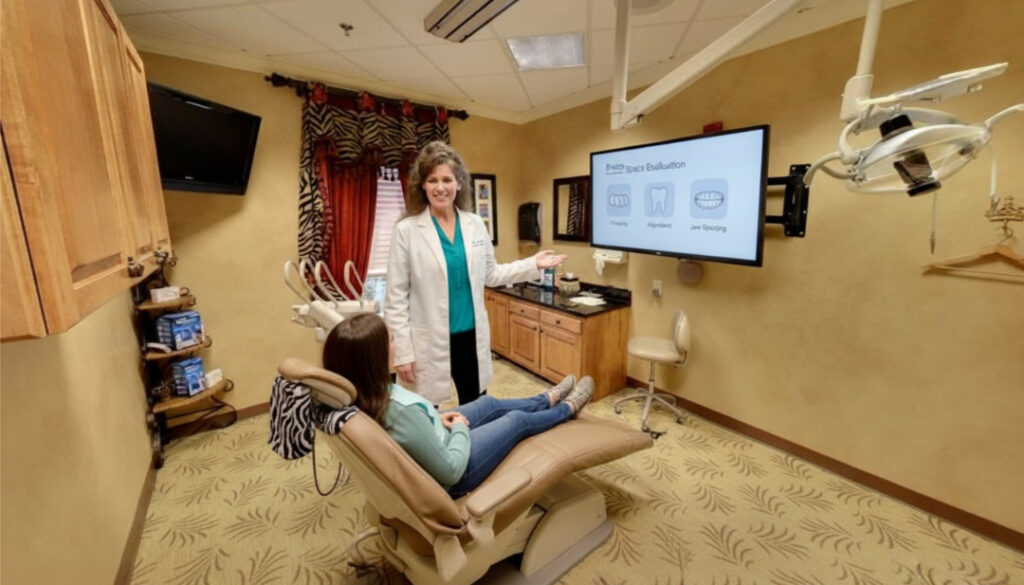
What Happens During the Procedure? [Step-by-Step Guide]
Pre-Surgery Preparation
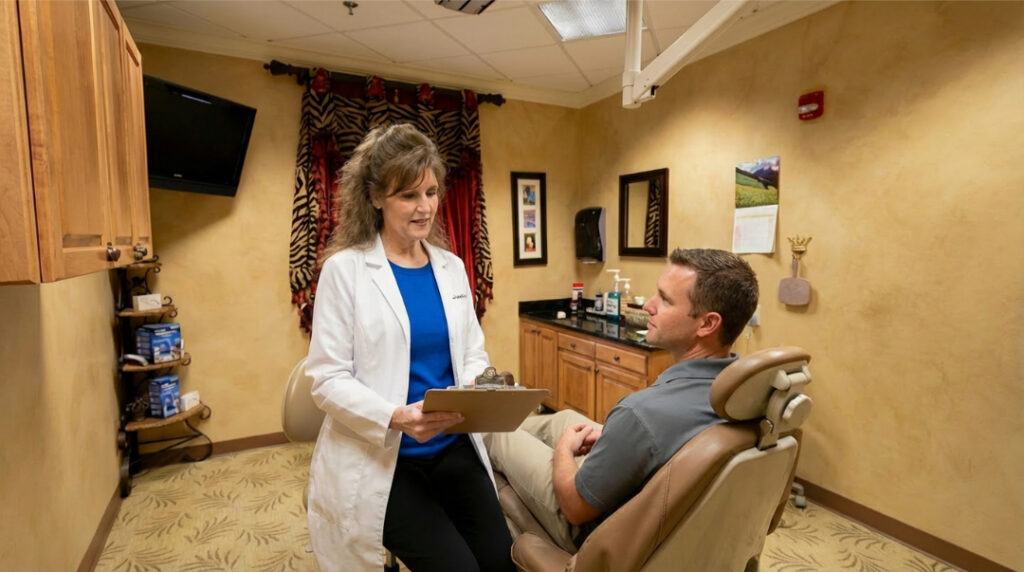
Review medical history
Discuss anesthesia options
Sign consent forms
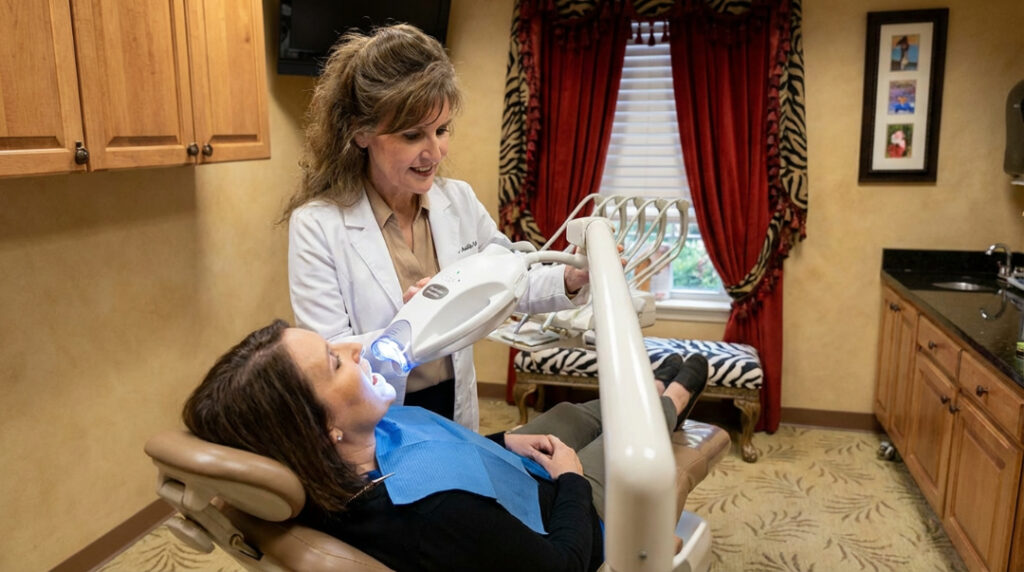
Sedation and Numbing
Local, IV, or general anesthesia administered
Area thoroughly numbed
In extremely rare cases, a no anesthesia extraction is performed—typically only when anesthesia isn’t an option due to medical concerns or patient refusal. These cases are highly painful and not generally advised.
Tooth Removal Process
Gum incision (for impacted teeth)
Tooth sectioning (if needed)
Removal using forceps
Post-Surgical Closure
Site is cleaned and stitched
Gauze applied for bleeding control
Recovery Observation
Short stay at the clinic for monitoring
Instructions provided for home care
What to Expect Immediately After Surgery
After the procedure, most patients stay at the clinic for 30–60 minutes for monitoring. Here's what to expect in the first few hours:
Mild to moderate bleeding (controlled with gauze)
Swelling and jaw stiffness
Numbness from anesthesia
Disorientation if sedated
First 24 Hours – Key Guidelines:
Rest and avoid physical exertion
Keep your head elevated
Avoid hot, spicy, or hard foods
Do not smoke or use straws
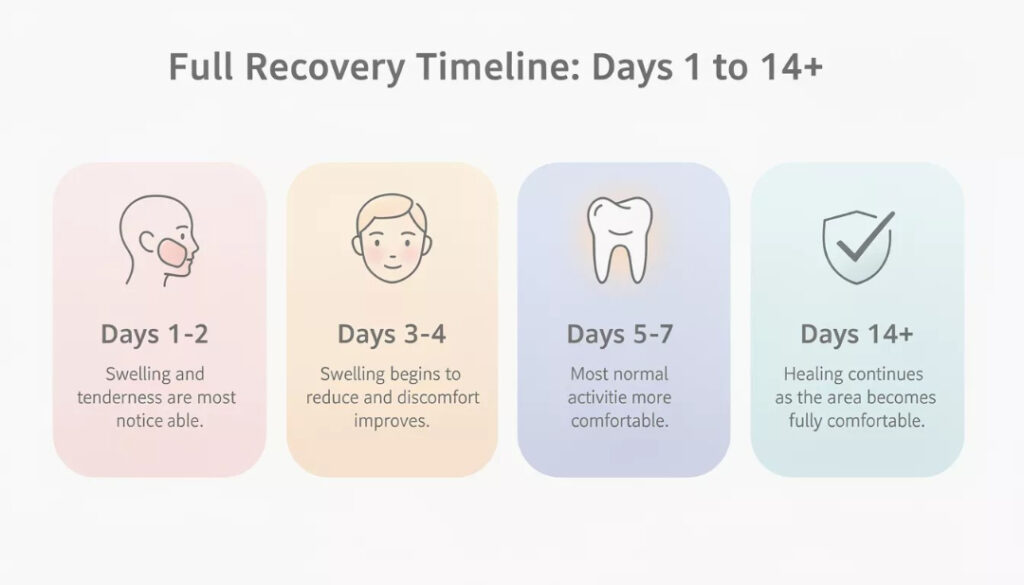
Full Recovery Timeline: Days 1 to 14+
Recovery time varies, but here’s a general guideline:
Day 1
Swelling and bleeding are common
Stick to soft, cold foods
Pain managed with prescribed meds
Day 3
Swelling peaks
Bruising may appear
Resume light activity
Day 7
Stitches (if non-dissolvable) may be removed
Most pain and swelling subsides
Normal eating can begin cautiously
Day 14+
Full recovery for most patients
Resume all normal activities
Best Foods to Eat After Wisdom Tooth Surgery
Eating the right foods can speed up recovery and reduce discomfort. For a complete list of what to eat (and what to skip), check out our Post-Surgery Eating Guide.
First 24 Hours – Stick to:
Applesauce
Greek yogurt
Mashed potatoes
Smoothies (no straw)
Days 2–7 – Add in:
Scrambled eggs
Soft pasta
Cottage cheese
Blended soups
Avoid:
Crunchy or hard foods (chips, nuts)
Acidic or spicy foods
Alcohol and caffeine
Sticky candies or chewing gum
Frequently Asked Questions (FAQ)
How painful is wisdom teeth surgery?
With proper anesthesia, the procedure is painless. Post-op soreness is common but manageable with medication.
When can I go back to work or school?
Many patients return within 2 to 3 days, depending on the surgery's complexity.
What are signs of complications?
Persistent bleeding beyond 24 hours,
Severe swelling or fever,
Foul taste or pus (signs of infection),
Dry socket (intense pain 2–3 days post-op)
When should I call my dentist?
Contact Buford Dentist if you notice signs of infection, prolonged bleeding, or unmanageable pain.
How Long Does It Take to Remove All Four Wisdom Teeth?
If you're planning to have all four wisdom teeth removed, expect:
Surgery Time: 45 to 90 minutes depending on impaction
Initial Recovery: 2 to 3 days of rest
Full Recovery: 10 to 14 days for most patients
Key Considerations:
Choose an experienced oral surgeon
Follow pre- and post-op instructions
Plan a few days off for recovery
Eat soft foods and hydrate
At Buford Dentist, we help make the entire process safe, efficient, and as comfortable as possible. Whether you're facing a simple extraction or a complex case, our expert team is here to guide you from start to finish.







































![What Happens During the Procedure? [Step-by-Step Guide]](https://buforddentist.com/wp-content/uploads/2025/12/buforddentist-what-happens-during-the-procedure-step-by-step-guide-1024x585.jpg)